
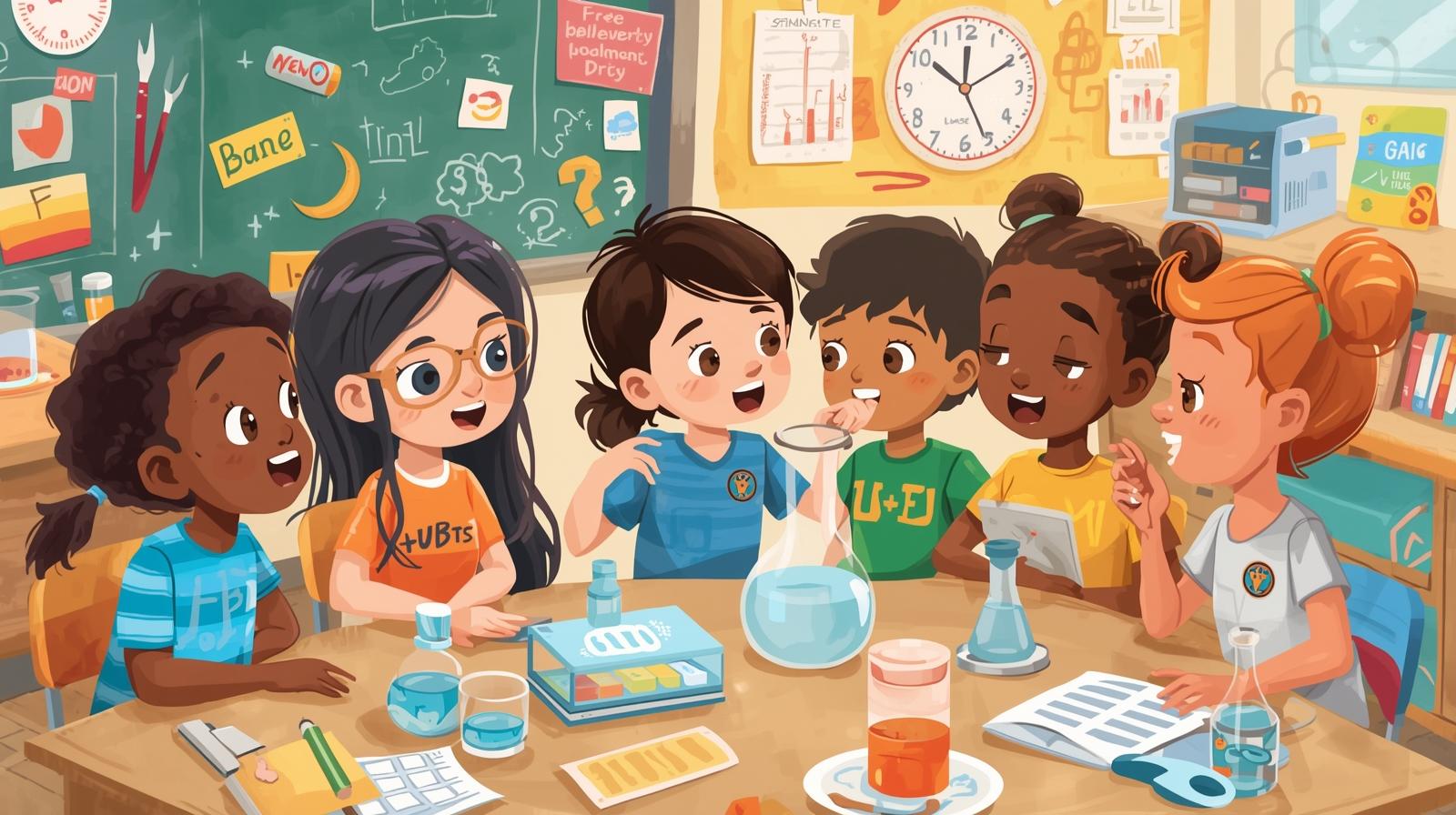
Science becomes truly exciting for young learners when they can see, touch, and experiment. Hands-on activities help elementary students understand scientific concepts while building curiosity and critical thinking.
Classroom-friendly experiments should be:
- Safe and easy to supervise
- Quick to set up
- Low-cost
- Engaging for groups of students
The following experiments are perfect for elementary classrooms and require only basic materials you may already have available.
1. Baking Soda Volcano
Science Concept: Chemical reactions
One of the most classic classroom experiments, the baking soda volcano demonstrates how two substances can react to produce gas.
Materials
- Baking soda
- Vinegar
- Dish soap
- Food coloring
- Small plastic cup or bottle
- Tray to contain the mess
Steps
- Place the cup in the center of the tray.
- Add a few spoonfuls of baking soda.
- Mix in a few drops of food coloring and dish soap.
- Pour vinegar into the cup and observe the eruption.
What Students Learn
When baking soda and vinegar mix, they create carbon dioxide gas, which forms bubbles and foam that overflow like a volcano.
2. Walking Water Experiment
Science Concept: Capillary action
This colorful experiment shows how water can move through absorbent materials.
Materials
- 5–6 clear cups
- Water
- Food coloring
- Paper towels
Steps
- Fill every other cup with water.
- Add different food coloring to each filled cup.
- Fold paper towels and place them between the cups.
- Leave the setup for several hours and observe.
What Students Learn
Water travels along the paper towels through capillary action, eventually filling the empty cups and mixing colors.
3. Growing Seeds in a Bag
Science Concept: Plant life cycles
Students love watching plants grow, and this simple setup allows them to observe the process closely.
Materials
- Ziplock bags
- Paper towels
- Water
- Bean seeds
Steps
- Wet a paper towel and place it inside the bag.
- Add a few seeds along the side of the bag.
- Seal the bag and tape it to a sunny window.
- Observe the changes each day.
What Students Learn
Students can see how roots form first, followed by stems and leaves, helping them understand plant development and growth.
4. Balloon Rocket
Science Concept: Newton’s Third Law of Motion
This fun activity demonstrates how forces work through action and reaction.
Materials
- Balloon
- String
- Straw
- Tape
- Two chairs or desks
Steps
- Thread the string through the straw and tie the string tightly between two chairs.
- Inflate the balloon but do not tie it.
- Tape the balloon to the straw.
- Release the balloon and watch it zoom across the string.
What Students Learn
Air rushing out of the balloon pushes it forward, demonstrating action and reaction forces.
5. Magnetic Treasure Hunt
Science Concept: Magnetism
This activity helps students explore which materials magnets attract.
Materials
- Magnets
- Paper clips
- Coins
- Plastic objects
- Small toys
Steps
- Place various objects in a container.
- Give students magnets to test each item.
- Sort objects into “magnetic” and “non-magnetic” groups.
What Students Learn
Students discover that magnets attract certain metals, particularly iron and steel.
6. Make a Cloud in a Jar
Science Concept: Condensation and weather
This experiment demonstrates how clouds form in the atmosphere.
Materials
- Glass jar
- Warm water
- Ice cubes
- Hairspray
Steps
- Pour a small amount of warm water into the jar.
- Spray a little hairspray inside the jar.
- Place ice cubes on the lid and set it on top.
- Watch as a cloud begins to form.
What Students Learn
When warm moist air meets cooler air, condensation occurs, creating cloud droplets.
7. Floating Egg Experiment
Science Concept: Density
This experiment clearly shows how density affects whether objects float or sink.
Materials
- Eggs
- Water
- Salt
- Clear glasses
Steps
- Fill one glass with plain water and place an egg inside.
- Fill another glass with water and add several tablespoons of salt.
- Place the egg into the saltwater and observe the difference.
What Students Learn
Salt increases the density of the water, allowing the egg to float.
Tips for Managing Science Experiments in the Classroom
Running experiments with a full classroom can be challenging. These tips help keep activities organized and productive.
Use Small Groups
Divide students into groups so everyone has a chance to participate.
Encourage Predictions
Before starting, ask students to predict what will happen. This builds scientific thinking.
Keep Experiments Short
Elementary students stay focused best when activities last 10–15 minutes.
Discuss Results Together
After the experiment, talk about what students observed and why it happened.
Why Hands-On Science Matters
Hands-on experiments help elementary students develop important skills such as:
- Observation and analysis
- Problem-solving
- Curiosity and questioning
- Understanding real-world scientific concepts
When students actively participate, science becomes exciting instead of abstract.
Final Thoughts
Classroom-friendly science experiments make learning interactive and memorable. With simple materials and clear instructions, teachers can introduce key scientific ideas while encouraging curiosity and exploration.
These activities not only teach science concepts but also inspire students to ask questions, test ideas, and think like scientists.
Meta Keywords:
classroom science experiments for elementary students, easy science experiments for kids, classroom STEM activities, simple science experiments for school, hands-on science activities for elementary students