
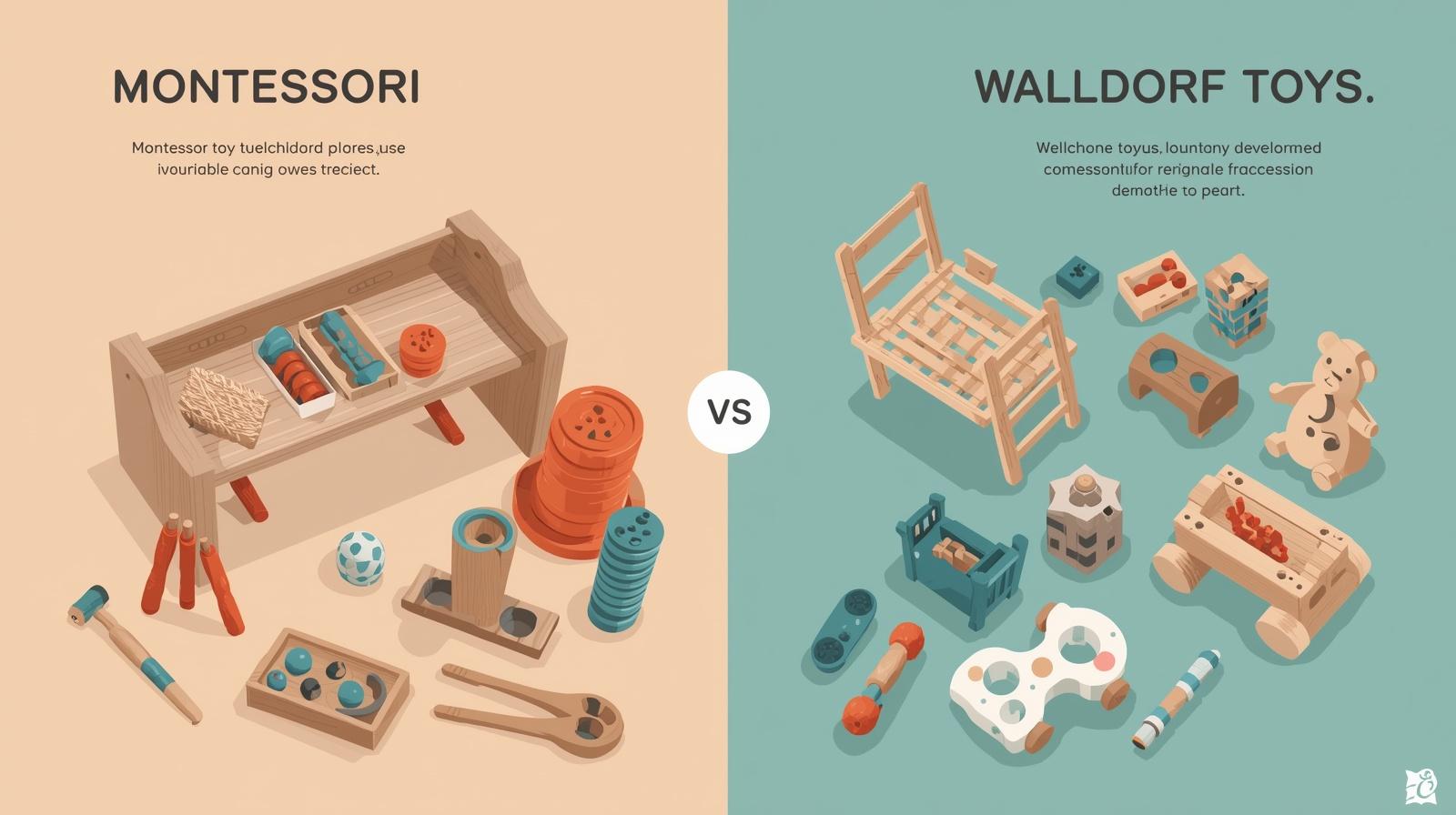
When it comes to choosing the best toys for young children, two philosophies often stand out: Montessori and Waldorf. Both focus on child development, creativity, and hands-on learning—but they take very different approaches.
If you’re a parent trying to decide which type of toy is better for your child, you’re not alone. This is one of the most searched and debated topics among modern parents.
In this guide, we’ll break down Montessori vs. Waldorf toys in a clear, practical way—so you can confidently choose what actually works best for your child’s early development.
What Are Montessori Toys?
Montessori toys are designed to teach independence, logic, and real-world skills through structured play.
Key Features:
- Skill-based learning
- Hands-on problem solving
- Real-life activity simulation
- Minimal distractions
What Are Waldorf Toys?
Waldorf toys focus on imagination, creativity, and emotional development through open-ended play.
Key Features:
- Imaginative storytelling
- Simple and natural design
- No fixed “right way” to play
- Emotional expression
Montessori vs. Waldorf Toys: Quick Comparison Table
| Feature | Montessori Toys | Waldorf Toys |
|---|---|---|
| Learning Focus | Logic & independence | Creativity & imagination |
| Play Style | Structured | Open-ended |
| Design | Realistic | Abstract |
| Skills Developed | Problem-solving | Creativity |
🛒Best Montessori Toys (With Amazon Links)
1. Wooden Shape Sorter (Top Beginner Pick)
- Builds problem-solving & motor skills
- Perfect for ages 1–3
2. Montessori Busy Board (Life Skills Toy)
- Teaches zipping, buttons, buckles
- Improves independence
3. Montessori Stacking & Sorting Toy
- Helps with counting, shapes, colors
- Strong early STEM foundation
🛒 Best Waldorf Toys (With Amazon Links)
1. Wooden Rainbow Stacker (Most Popular)
- Open-ended creative play
- Can be used in dozens of ways
2. Waldorf Doll (Emotional Development)
- Encourages storytelling
- Supports emotional intelligence
3. Play Silks for Kids (Creative Play Essential)
- Perfect for pretend play (cape, tent, dress)
- Unlimited imagination
Pros and Cons
Montessori Toys
Pros:
- Builds real-life skills
- Encourages independence
- Great for early STEM learning
- Improves focus
Cons:
- Less imaginative
- Can feel repetitive
Waldorf Toys
Pros:
- Boosts creativity
- Encourages storytelling
- Long playtime engagement
- Emotional development
Cons:
- Less structured learning
- No clear measurable outcomes
🏆Winner Breakdown (High-Converting Section)
- Best for Brain Development → Montessori
- Best for Creativity → Waldorf
- Best for Long-Term Learning → Montessori
- Best for Fun & Engagement → Waldorf
👉 Overall Winner: BOTH (Best when combined)
Which Should You Choose?
Choose Montessori If:
- You want early academic skills
- You prefer structured learning
- Your child enjoys solving problems
Choose Waldorf If:
- You want creativity and imagination
- Your child loves pretend play
- You prefer natural learning
Final Verdict
If you want the best results:
👉 Combine both types of toys.
- Montessori builds skills + independence
- Waldorf builds creativity + imagination
Together, they create a complete learning environment for your child.
FAQs
Are Montessori toys better than Waldorf?
No—each serves a different purpose. The best choice is a mix of both.
Can I use both together?
Yes, and it’s highly recommended.
Which is better for a 3-year-old?
A balanced mix works best at this age.
Final Thoughts
There’s no “one perfect toy philosophy.” The real goal is to raise a curious, confident, and creative child.
And the best way to do that?
👉 Give them both structure and freedom through play.