
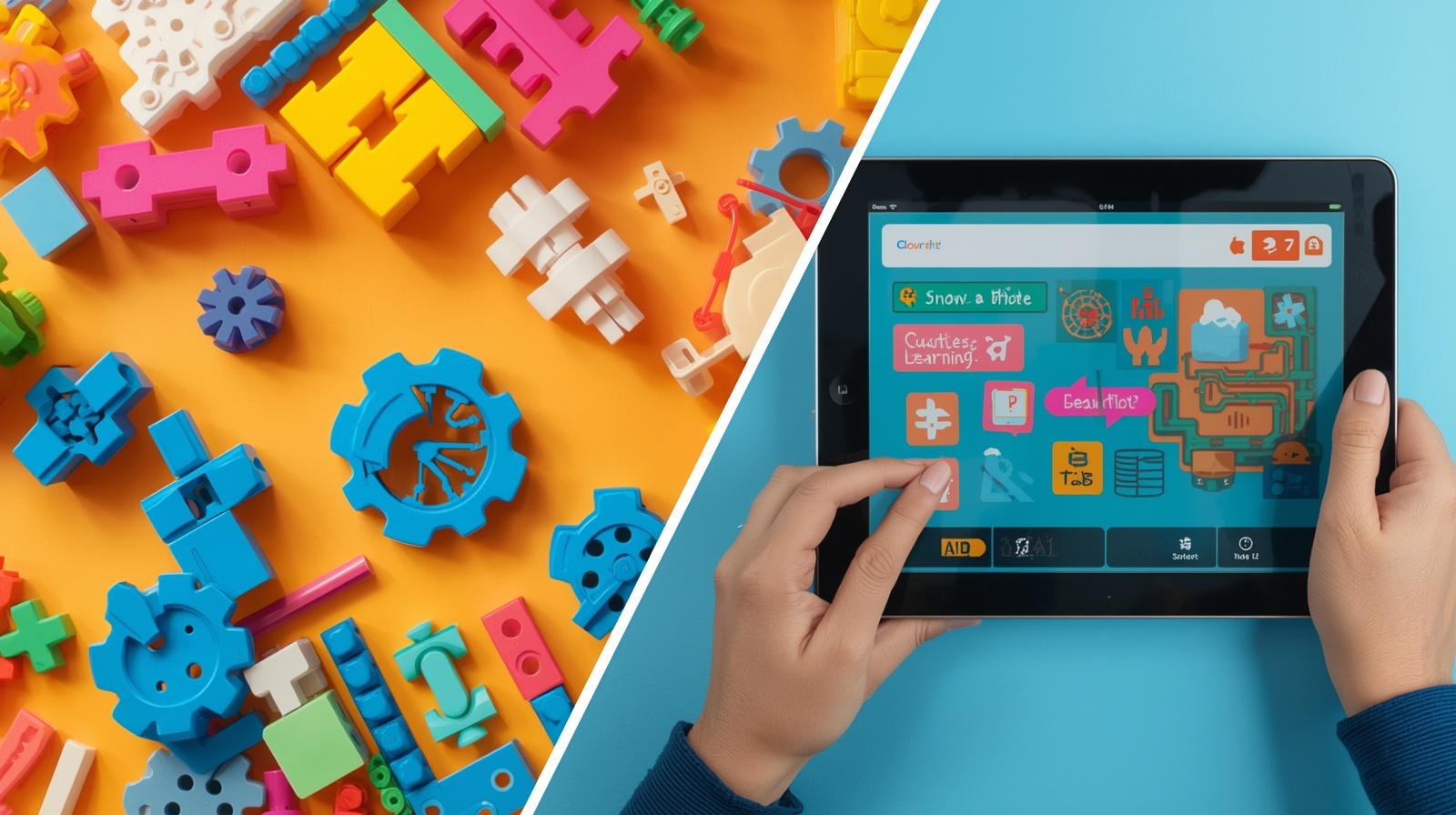
If you’re a parent, you’ve probably been here before.
Your child is on a tablet, playing something labeled “educational.” It looks colorful. It sounds smart. But deep down, you’re wondering:
Is this actually helping them learn—or just keeping them busy?
At the same time, you might be considering STEM toys—building kits, robotics sets, hands-on tools that promise real skill development.
So the question becomes simple:
Which one actually works better for real learning—STEM toys or educational apps?
Let’s break it down in a practical, honest way.
What Are STEM Toys?
STEM toys are designed to teach science, technology, engineering, and math through hands-on play.
Instead of watching or tapping, kids are actively involved. They build things, test ideas, make mistakes, and try again.
That process matters more than it seems. It’s how real learning happens.
If you want a deeper look at what these toys actually teach, this guide explains it well:
What STEM Toys Actually Teach That Screens Can’t
A Few STEM Toys That Truly Stand Out
Not all STEM toys are equal. Some get played once and forgotten. Others become part of your child’s daily routine.
Here are a few types that consistently work well for real learning:
What makes these kinds of toys effective is simple:
They don’t give instant answers. They make kids think, try, fail, and figure things out. That’s where the learning happens.
What Are Educational Apps?
Educational apps are digital tools designed to teach through games, quizzes, and interactive lessons.
They’re easy to use. They’re everywhere. And in small doses, they can be helpful.
But most of them rely on quick interactions—tapping, swiping, reacting—rather than deep thinking.
That’s where the difference starts to show.
The Real Differences That Matter
Learning Style
STEM toys create active learning. Kids are physically involved. They build something, change it, improve it.
Apps, on the other hand, guide kids through pre-set paths. There’s usually a right answer and a quick reward.
If you’ve ever seen your child spend an hour building something versus tapping through a game, you’ve already noticed the difference.
If you’re looking for ideas that don’t involve screens at all, this post is worth reading:
STEM Toys That Keep Kids Busy for Hours (No Screen Needed)
Attention and Focus
One of the biggest differences shows up in how long kids stay engaged.
With STEM toys, children often stay focused for long periods. They get absorbed in what they’re building or solving.
With apps, attention tends to jump quickly. There’s constant stimulation, but not always deep focus.
If improving attention is important to you, you might find this helpful:
Top STEM Toys That Improve Focus and Attention
STEM Toys That Keep Kids Engaged Longer
Some toys naturally hold attention better than others. These are the kinds parents often mention when they say, “My child actually sticks with this.”
These types of toys tend to work because they offer something new every time your child uses them.
They don’t run out of possibilities after one session.
Creativity and Problem-Solving
STEM toys don’t usually come with one correct answer. A child can build something one way today and a completely different way tomorrow.
That flexibility builds creativity.
Apps are more structured. They guide kids toward specific outcomes. That’s not always bad, but it limits exploration.
If you’re interested in why open-ended play matters so much, this explains it clearly:
Why Open-Ended STEM Toys Beat Flashy Gadgets Every Time
Screen Time and Habits
This is where many parents start to feel the impact.
STEM toys naturally reduce screen time because they don’t require a device at all.
Apps, even educational ones, still add to total screen exposure. And once kids are on a device, it’s easy for “learning time” to turn into entertainment.
If reducing screen time is a goal in your home, this guide offers practical ideas:
How to Use STEM Toys to Reduce Screen Time Without Complaints
Good Alternatives to Educational Apps
If you’re trying to move away from screens, the goal isn’t just to remove apps—it’s to replace them with something equally engaging.
These kinds of tools work well because they offer challenge, creativity, and progress—all without a screen.
Skill Development
Over time, the difference becomes clearer.
STEM toys help build:
- Coordination
- Spatial awareness
- Logical thinking
- Patience
There’s also a strong connection to executive function skills, which are essential for planning and problem-solving. This article explains that in more detail:
How STEM Toys Build Executive Function
What Parents Notice Over Time
Many parents say the same things after switching to more hands-on toys:
- Their child stays engaged longer
- Play feels more meaningful
- Creativity improves
- There’s less dependence on screens
If your child tends to lose interest quickly, you might find this especially useful:
Best STEM Toys for Kids Who Get Bored Easily (Tested by Parents)
So, Which One Is Better?
If the goal is convenience, apps are easier.
If the goal is real learning, STEM toys are the better choice.
They help children:
- Understand how things work
- Think independently
- Stay focused
- Build skills that last
That doesn’t mean apps have no place. They can be useful in small amounts, especially for reinforcing simple concepts.
But they work best as a supplement—not the foundation.
A Balanced Approach That Works
Many parents find success with a simple balance:
Most of the time is spent on hands-on play with STEM toys.
A smaller portion is used for educational apps.
This way, children get both:
- Depth from real-world interaction
- Convenience from digital tools
FAQ
Are educational apps harmful?
Not on their own. The issue comes from overuse and reliance on screens instead of hands-on experiences.
When should kids start using STEM toys?
Even very young children can benefit from simple, hands-on toys. If you want a full breakdown by age, this guide is helpful:
What Age Should You Start STEM Toys?
Can apps replace hands-on learning?
No. They can support learning, but they can’t replace physical interaction and real-world problem-solving.
What’s the best alternative to apps?
Open-ended STEM toys like building kits, beginner robotics, and creative construction sets.