
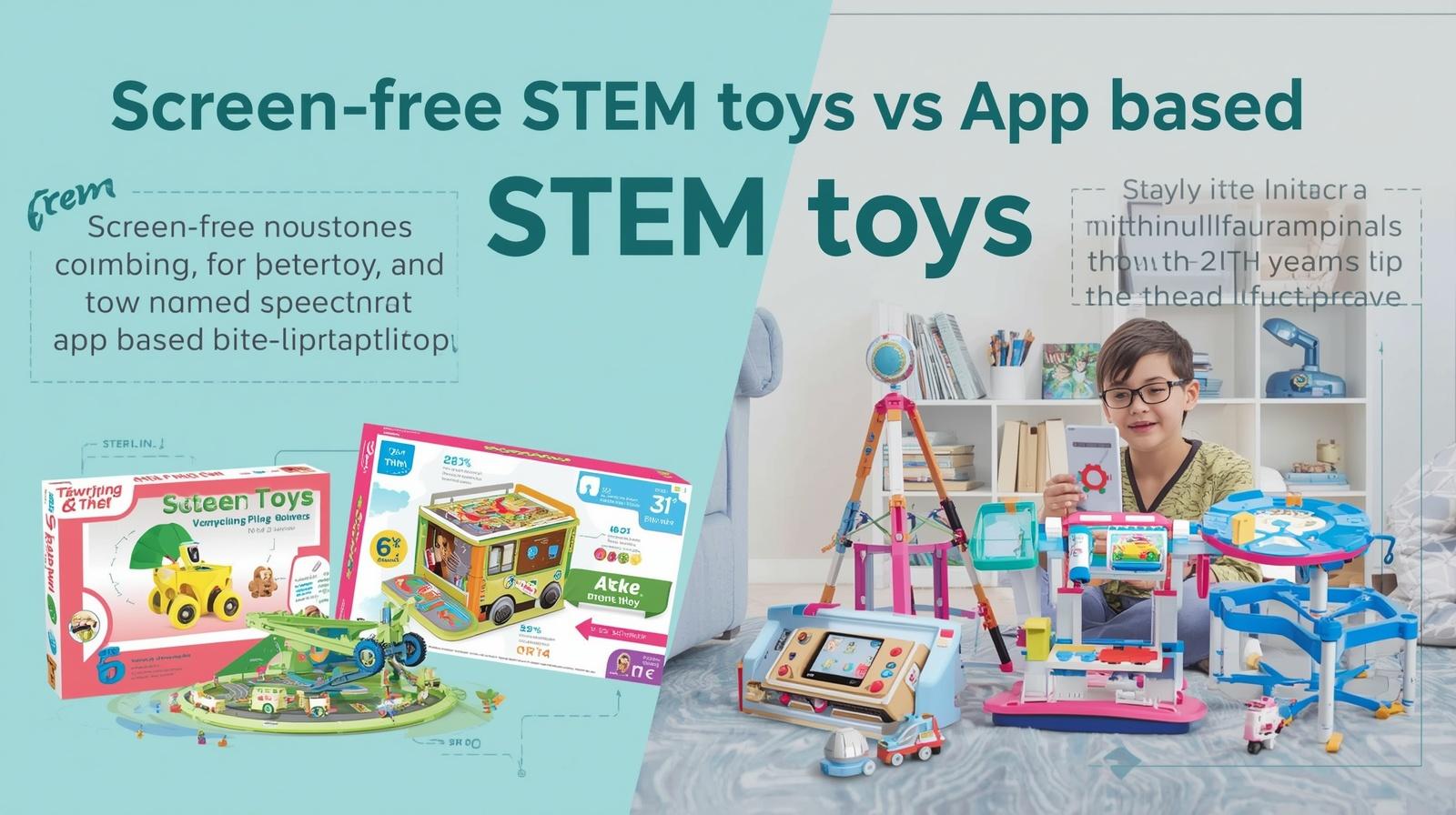
Most parents today are trying to find a balance.
On one side, there are screens everywhere—tablets, phones, apps that promise learning through games.
On the other side, there are screen-free STEM toys—building kits, puzzles, hands-on tools that encourage real-world interaction.
Both claim to be educational. Both can keep kids busy.
But if your goal is focus, creativity, and real learning, the difference between them is bigger than it seems.
So before you decide what to buy next, it’s worth understanding:
What actually works better for your child?
What Are Screen-Free STEM Toys?
Screen-free STEM toys are physical, hands-on tools that don’t require any digital device.
Examples include:
- Building kits
- Magnetic tiles
- Circuit sets
- Logic puzzles
Kids interact with real objects instead of screens.
They build, test, adjust, and learn through experience.
If you want to explore why this matters, this article explains it clearly:
What STEM Toys Actually Teach That Screens Can’t
Popular Screen-Free STEM Toys Parents Choose
These types of toys work because they keep kids engaged without needing constant stimulation.
What Are App-Based STEM Toys?
App-based STEM toys combine physical toys with digital apps or are entirely app-driven.
They usually involve:
- Tablets or smartphones
- Interactive lessons
- Gamified learning
Some include coding games, virtual experiments, or augmented reality features.
They can be engaging—but rely heavily on screen interaction.
The Core Difference
At a basic level:
- Screen-free toys = active, physical learning
- App-based toys = digital, guided interaction
Both have value, but they shape how children think and learn in very different ways.
Deep Comparison: What Really Matters
1. Attention and Focus
Screen-free toys naturally encourage longer attention spans.
Kids stay engaged because they are:
- Building something
- Solving a problem
- Working with their hands
App-based toys often rely on:
- Fast rewards
- Bright visuals
- Constant feedback
This can make it harder for kids to develop deep focus over time.
If improving attention is your goal, this guide is helpful:
Top STEM Toys That Improve Focus and Attention
Toys That Keep Kids Engaged Without Screens
These types of toys tend to hold attention because they offer new challenges every time.
2. Creativity and Imagination
Screen-free toys are usually open-ended.
There’s no single “right way” to use them.
Kids can:
- Build differently each time
- Experiment freely
- Create their own ideas
App-based toys are more structured.
They guide kids through specific steps and outcomes.
If you want to understand why open-ended play matters, this explains it well:
Why Open-Ended STEM Toys Beat Flashy Gadgets
3. Learning Depth
Screen-free toys often lead to deeper understanding because kids:
- Experience cause and effect directly
- Solve problems physically
- Learn through trial and error
App-based tools can teach concepts quickly—but often at a surface level.
They’re good for:
- Reinforcement
- Practice
- Introduction to topics
But not always for deep mastery.
4. Screen Time Impact
This is one of the biggest concerns for parents.
Screen-free toys:
- Reduce total screen time
- Encourage healthier habits
- Support better sleep and focus
App-based toys:
- Add to daily screen exposure
- Can lead to overuse
- Make it harder to disconnect
If you’re trying to reduce screen time, this guide can help:
How to Use STEM Toys to Reduce Screen Time Without Complaints
Good Alternatives to App-Based Learning
These provide learning without relying on a device.
5. Ease of Use for Parents
Screen-free toys are usually simple:
- Open the box and start
- No setup or accounts
- No updates or technical issues
App-based toys may require:
- Device compatibility
- App downloads
- Ongoing maintenance
For busy parents, this can be a deciding factor.
What Parents Notice Over Time
After switching to more screen-free options, many parents report:
- Longer play sessions
- Less boredom
- Better creativity
- Reduced screen dependency
If your child gets bored quickly, this post may help:
Best STEM Toys for Kids Who Get Bored Easily
Which One Should You Choose?
Choose Screen-Free STEM Toys if:
- You want better focus
- You want less screen time
- Your child enjoys hands-on play
Choose App-Based STEM Toys if:
- You want quick learning tools
- Your child enjoys digital interaction
- You use them in moderation
The Best Approach (What Works for Most Families)
You don’t have to choose only one.
A balanced approach works best:
- Mostly screen-free toys for deep learning
- Some app-based tools for reinforcement
This gives your child both:
- Real-world skills
- Digital familiarity
Final Verdict
If your goal is real learning and long-term development, screen-free STEM toys are the better foundation.
App-based tools can support learning—but shouldn’t replace hands-on experiences.
FAQ
Are app-based STEM toys bad?
Not necessarily. The issue is overuse, not the tools themselves.
Do kids learn better without screens?
In many cases, yes—especially for focus, creativity, and problem-solving.
Can app-based toys replace hands-on learning?
No. They can support learning but not replace real interaction.
What’s the best alternative to apps?
Open-ended STEM toys like building kits, coding toys, and magnetic tiles.