
If you’re planning to introduce your child to coding, you’ve likely come across two popular options:
Coding toys and robotics kits.
At first glance, they seem similar. Both promise to teach programming skills. Both are labeled as STEM learning tools.
But once you look closer, they offer very different experiences.
Some parents start with robotics and find it too complex. Others begin with coding toys and wonder if their child is actually learning anything meaningful.
So the real question is:
Which one should you buy first—and why?
This guide breaks it down in a simple, practical way based on how kids actually learn and engage.
What Are Coding Toys?
Coding toys are designed to teach programming concepts in a simple, beginner-friendly way.
They often include:
- Screen-free coding (buttons, blocks, sequences)
- App-based coding games
- Step-by-step challenges
The goal is to teach logic:
- Sequences
- Patterns
- Cause and effect
They’re usually easier to start with and require less setup.
If you’re exploring screen-free coding options, this post is useful:
STEM Toys That Teach Coding Without a Screen
What Are Robotics Kits?
Robotics kits go a step further.
Instead of just coding, kids:
- Build a robot
- Program it to move or respond
- Solve real-world challenges
This combines:
- Engineering
- Coding
- Problem-solving
It’s more hands-on—but also more complex.
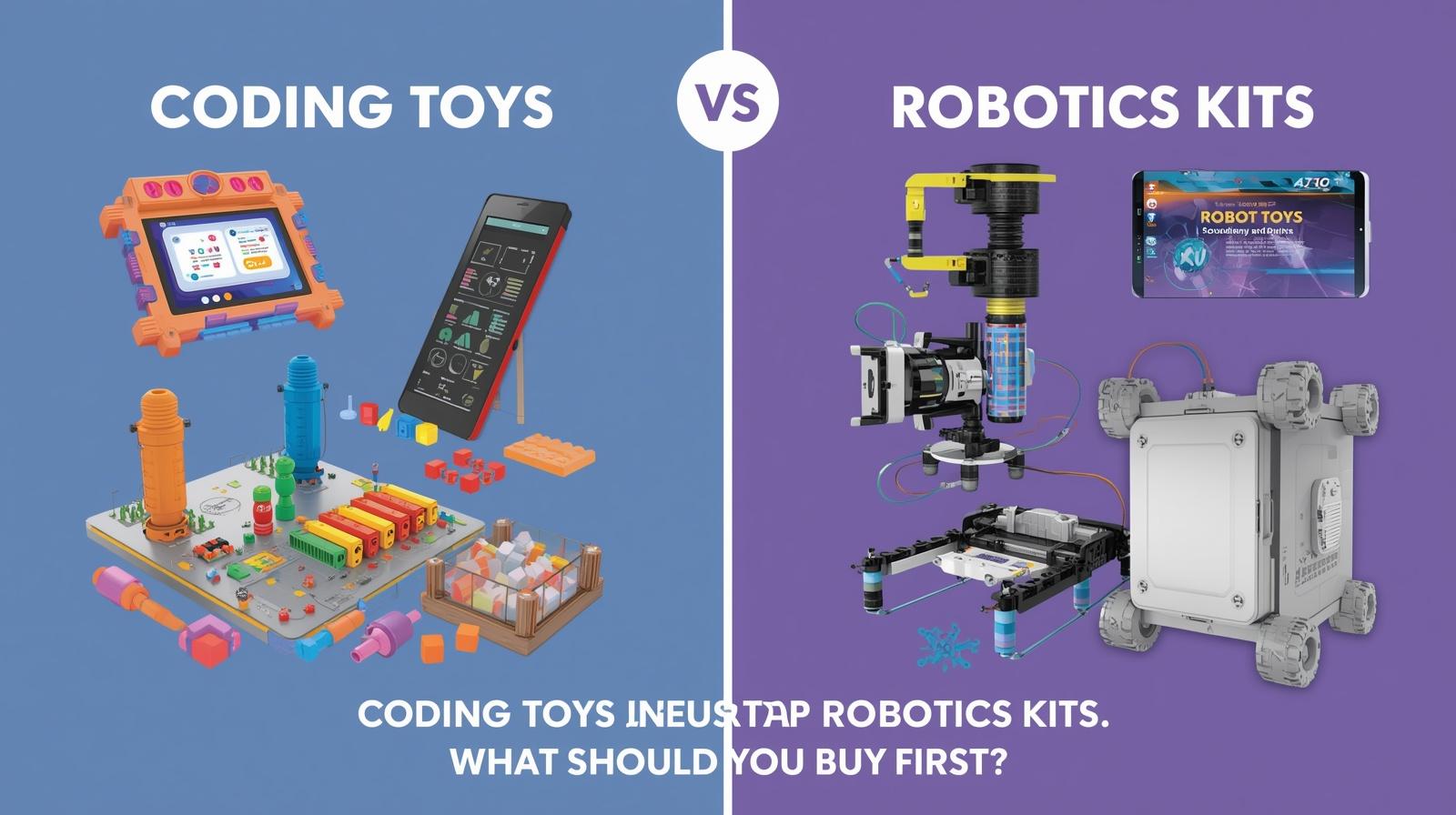
What These Toys Look Like in Real Life
Here are the types of products most parents compare:
These represent the typical progression:
- Coding toys → simple logic
- Robotics kits → real-world application
The Core Difference
The easiest way to understand it:
- Coding toys teach how to think
- Robotics kits teach how to apply that thinking
Both are valuable—but not equally suited for beginners.
Skill-by-Skill Comparison
1. Ease of Getting Started
Coding toys are much easier to start with.
Kids can:
- Jump in quickly
- Understand basic concepts
- See results immediately
Robotics kits often require:
- Assembly
- Instructions
- More patience
For beginners, coding toys feel less overwhelming.
2. Learning Curve
Coding toys introduce:
- Sequences
- Logic
- Simple commands
Robotics kits add:
- Mechanical building
- Troubleshooting
- Multi-step thinking
This makes robotics more powerful—but also more challenging.
Toys That Help Kids Learn Faster (Without Frustration)
The key is starting at the right level.
Too easy → boredom
Too hard → frustration
3. Engagement and Fun
This depends heavily on the child.
- Coding toys feel like games
- Robotics kits feel like projects
Some kids prefer quick wins (coding toys).
Others enjoy building something real (robotics).
If your child gets bored easily, this can help:
Best STEM Toys for Kids Who Get Bored Easily
4. Creativity and Exploration
Coding toys are often structured.
Robotics kits offer more open-ended exploration:
- Modify builds
- Change behavior
- Experiment freely
If creativity is a priority, robotics has the edge.
5. Real Skill Development
Coding toys build:
- Logical thinking
- Pattern recognition
- Basic programming concepts
Robotics kits build:
- Engineering skills
- Problem-solving
- Real-world application
Both are valuable—but robotics goes deeper.
Which One Is Better by Age?
Ages 4–6
Start with coding toys.
Simple, visual, and frustration-free.
Ages 6–8
Begin with coding toys, then introduce basic robotics.
Ages 8+
Robotics kits become more effective.
Kids can handle complexity and multi-step tasks.
Screen-Free vs Screen-Based Learning
Many coding toys are now screen-free, which helps reduce device time.
Robotics kits may require apps—but they still involve hands-on work.
If reducing screen time is important, this guide is useful:
How to Use STEM Toys to Reduce Screen Time
What Most Parents Get Wrong
A common mistake is starting too advanced.
Parents buy a robotics kit thinking it’s “better,” but the child:
- Gets confused
- Needs constant help
- Loses interest
Starting simple often leads to better long-term learning.
A Smarter Learning Path
The most effective approach looks like this:
- Start with coding toys
- Build confidence and logic
- Move to robotics kits
- Apply those skills in real projects
This progression matches how kids naturally learn.
Final Verdict
If you’re choosing your first STEM coding toy:
Start with coding toys.
They:
- Build a strong foundation
- Are easier to use
- Keep kids engaged early
Then move to robotics kits when your child is ready.
FAQ
Are coding toys enough to learn programming?
They’re a great starting point, but eventually kids benefit from more advanced tools like robotics.
Are robotics kits too difficult for beginners?
They can be, especially for younger kids or first-time learners.
Which is more fun?
It depends on the child. Coding toys feel like games. Robotics kits feel like building real things.
Can I skip coding toys and go straight to robotics?
You can—but it often leads to frustration unless your child is older or already interested.