
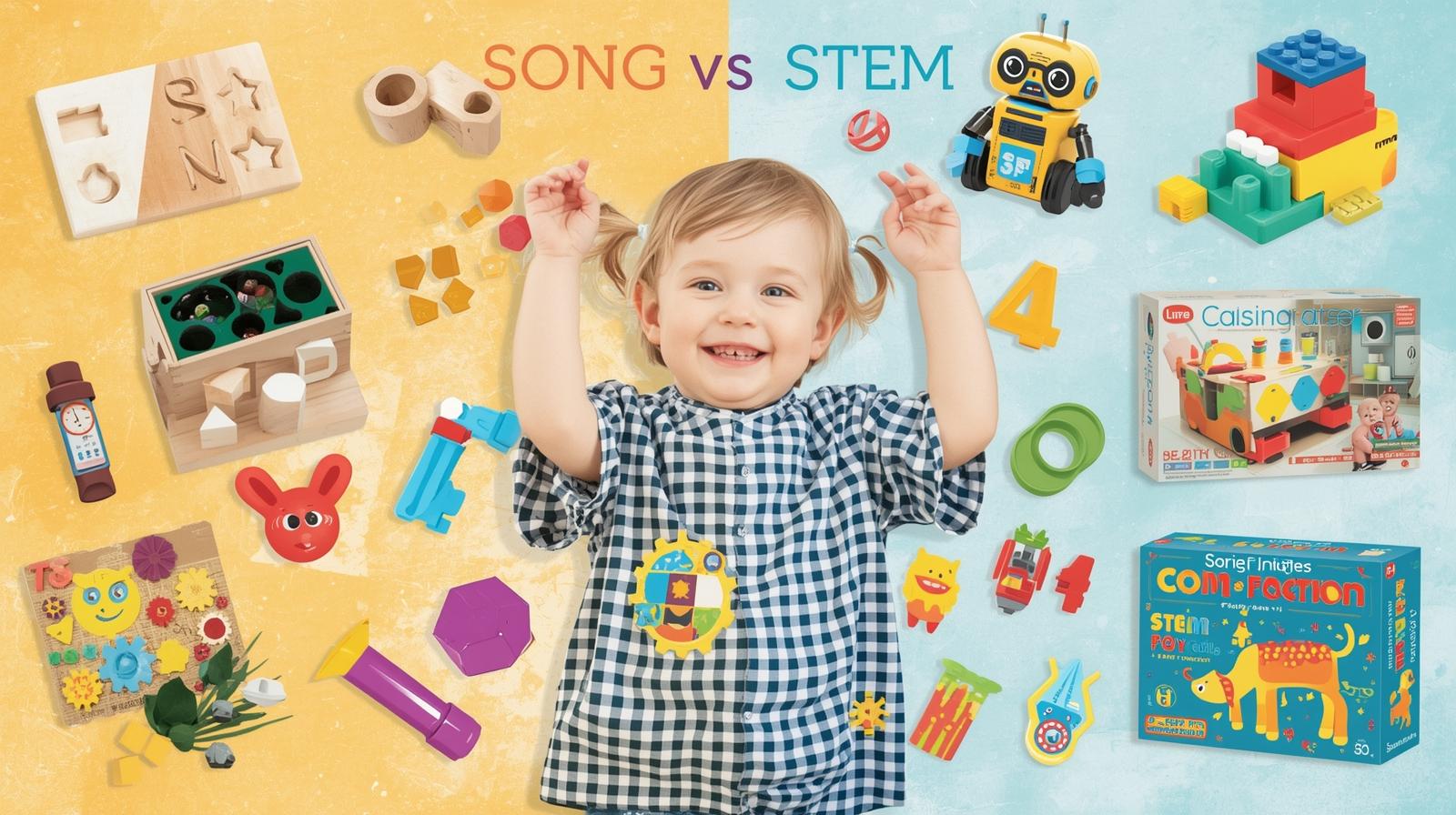
Choosing the right toys for a 3-year-old can feel overwhelming. Parents often hear about Montessori toys and STEM toys, but understanding the difference—and which works better—can be confusing.
Both approaches aim to support early development, but they do so in very different ways.
In this guide, we’ll break down:
- What Montessori toys focus on
- What STEM toys teach at age 3
- Key differences between the two
- Which one actually works better for your child
By the end, you’ll have a clear answer based on real learning benefits—not marketing hype.
What Are Montessori Toys?
Montessori toys are based on the teaching philosophy of Maria Montessori.
These toys are designed to promote independence, focus, and real-world skills through simple, hands-on activities.
Key Features of Montessori Toys
- Made from natural materials (wood, fabric)
- Minimal distractions (no lights or sounds)
- Focus on one skill at a time
- Encourage self-directed learning
Examples for 3-Year-Olds
- Wooden puzzles
- Sorting and stacking toys
- Practical life tools (pouring, scooping)
- Shape matching boards
What Are STEM Toys for 3-Year-Olds?
STEM stands for Science, Technology, Engineering, and Math. STEM toys introduce these concepts through play.
At age 3, STEM toys are very simple and hands-on, focusing on exploration rather than complex learning.
Key Features of STEM Toys
- Encourage building and experimentation
- Introduce cause-and-effect concepts
- Promote curiosity and questioning
- Often include colorful, interactive elements
Examples for 3-Year-Olds
- Magnetic building blocks
- Simple construction sets
- Beginner marble runs
- Basic coding toys (screen-free)
Montessori vs STEM Toys: Key Differences
Here’s a clear comparison to help you understand how they differ:
Learning Style
Montessori:
Focused, calm, and independent learning
STEM:
Exploratory, creative, and experiment-driven learning
Type of Skills Developed
Montessori:
- Fine motor skills
- Concentration
- Daily life skills
- Independence
STEM:
- Problem-solving
- Logical thinking
- Creativity
- Early engineering skills
Play Experience
Montessori:
Structured and purposeful
STEM:
Open-ended and experimental
Sensory Stimulation
Montessori:
Minimal and calming
STEM:
More engaging and stimulating
Which One Works Better for 3-Year-Olds?
The truth is—both work, but for different reasons.
Montessori Works Best For:
- Developing focus and patience
- Improving fine motor skills
- Teaching independence
- Creating calm play environments
STEM Works Best For:
- Encouraging curiosity and exploration
- Building problem-solving skills
- Introducing early science concepts
- Keeping highly active kids engaged
The Best Approach: Combine Both
Instead of choosing one over the other, the smartest approach is to combine Montessori and STEM toys.
At age 3, children benefit from:
- Montessori toys for foundational skills
- STEM toys for curiosity and creativity
Example Daily Play Balance
- Morning: Montessori activities (sorting, puzzles)
- Afternoon: STEM play (building, experimenting)
This balance helps children develop both focus and creativity.
Common Mistakes Parents Make
Choosing Toys Based on Trends
Just because a toy is labeled “Montessori” or “STEM” doesn’t mean it’s effective. Focus on how your child interacts with it.
Overloading with Too Many Toys
Too many options can overwhelm a child. Rotate toys to keep interest high.
Ignoring Your Child’s Personality
Some kids prefer calm activities, while others love active exploration. Choose toys based on your child’s natural behavior.
Final Thoughts
So, Montessori vs STEM toys—which is better?
The answer isn’t one or the other.
Montessori toys help children build strong foundations, while STEM toys encourage them to explore and innovate.
For 3-year-olds, the best results come from a balanced mix of both. This combination supports:
- Focus and independence
- Creativity and curiosity
- Real-world skills and problem-solving
In the end, the best toy is one that keeps your child engaged, curious, and learning through play.
FAQ: Montessori vs STEM Toys
Are Montessori toys better than STEM toys?
Not necessarily. Montessori toys are better for focus and independence, while STEM toys are better for exploration and problem-solving. Both have unique benefits.
Can a 3-year-old use STEM toys?
Yes. STEM toys for 3-year-olds are designed to be simple and hands-on, focusing on basic concepts like building and cause-and-effect.
Should I choose Montessori or STEM?
You don’t have to choose. A combination of both provides the best learning experience.
Are expensive toys better?
No. The effectiveness of a toy depends on how it’s used, not its price. Many affordable toys can provide excellent learning value.
How many toys should a 3-year-old have?
It’s better to have fewer, high-quality toys and rotate them regularly to maintain interest and engagement.