
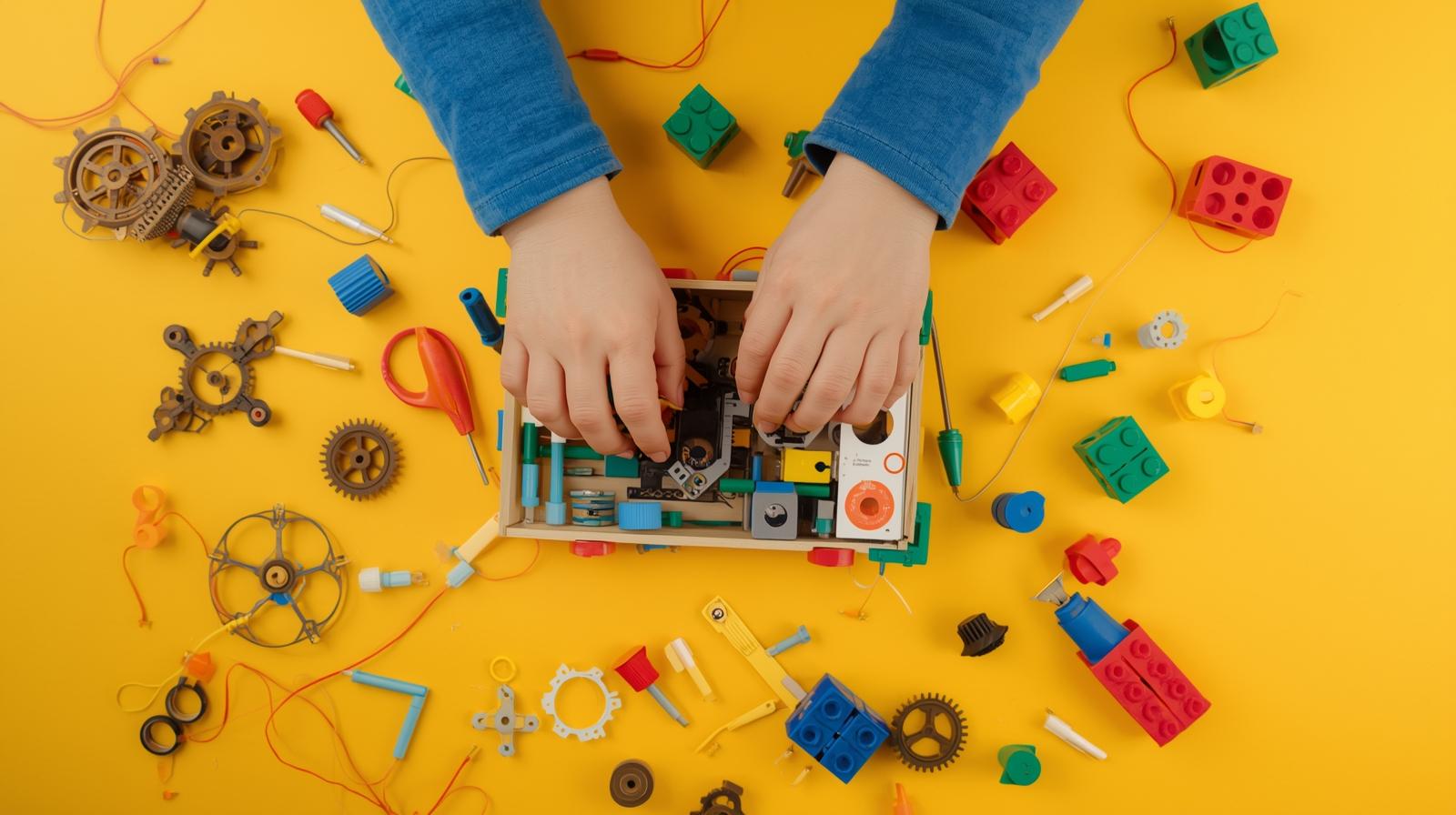
When many parents hear “science kits,” they picture rigid instructions, fixed outcomes, and kids rushing to finish just to see the result. But the best science kits today look very different.
Modern STEM kits don’t just teach scientific concepts — they invite creativity, experimentation, and personal expression. These are what we like to call crafty STEM kits: hands-on science experiences that feel more like creative projects than school assignments.
Here’s why these kits matter and how they support both science learning and creativity at the same time.
Why Creativity Belongs in Science Learning
Real science isn’t about following steps perfectly. It’s about curiosity, testing ideas, and refining designs.
Creative science kits help kids:
- Think beyond one “right” answer
- Experiment with different approaches
- Stay engaged longer
When creativity is part of the process, kids are more likely to explore deeply instead of rushing to the end.
What Makes a Science Kit “Crafty”?
Not all STEM kits encourage creativity.
Crafty STEM kits usually:
- Allow customization
- Encourage redesign or decoration
- Support multiple outcomes
Instead of producing identical results, each child’s project looks and functions a little differently.
Art and Design Reinforce Scientific Thinking
When kids design their own projects, they naturally apply scientific reasoning.
For example:
- Mixing colors reinforces chemistry concepts
- Designing structures strengthens engineering thinking
- Decorating circuits supports understanding of function and form
Art doesn’t replace science — it helps kids understand it more fully.
Crafty STEM Kits Build Persistence
Creative projects rarely work perfectly the first time.
Kids learn to:
- Adjust designs
- Try new ideas
- Learn from mistakes
This trial-and-error process builds resilience, which is a core skill in both science and real life.
Creativity Reduces Science Anxiety
Some kids feel intimidated by science because they fear getting answers wrong.
Creative STEM kits reduce that pressure by:
- Valuing exploration over accuracy
- Encouraging personal expression
- Making learning playful
When science feels safe and flexible, kids participate more confidently.
Open-Ended Instructions Lead to Deeper Learning
The best crafty science kits offer guidance without limiting imagination.
Instead of strict steps, they provide:
- Suggestions
- Challenges
- Opportunities for expansion
This approach encourages kids to ask questions and take ownership of their learning.
These Kits Appeal to a Wider Range of Learners
Creative science kits often engage children who might otherwise avoid STEM.
They are especially effective for:
- Visual learners
- Hands-on learners
- Kids who love art and design
By blending creativity with science, these kits welcome more kids into STEM play.
How Parents Can Support Crafty STEM Play
You don’t need to teach or correct.
Try to:
- Ask open-ended questions
- Celebrate effort, not perfection
- Encourage kids to explain their ideas
Your role is to support exploration, not control outcomes.
Long-Term Benefits of Creative Science Play
Children who engage in creative STEM experiences often develop:
- Strong problem-solving skills
- Confidence in experimentation
- A positive attitude toward science
These benefits extend far beyond the kit itself.
Final Thoughts
Science and creativity aren’t opposites — they’re partners.
Crafty STEM kits prove that learning science can be imaginative, expressive, and deeply engaging. When kids are free to create while they experiment, science becomes something they want to explore — not something they’re told to finish.