
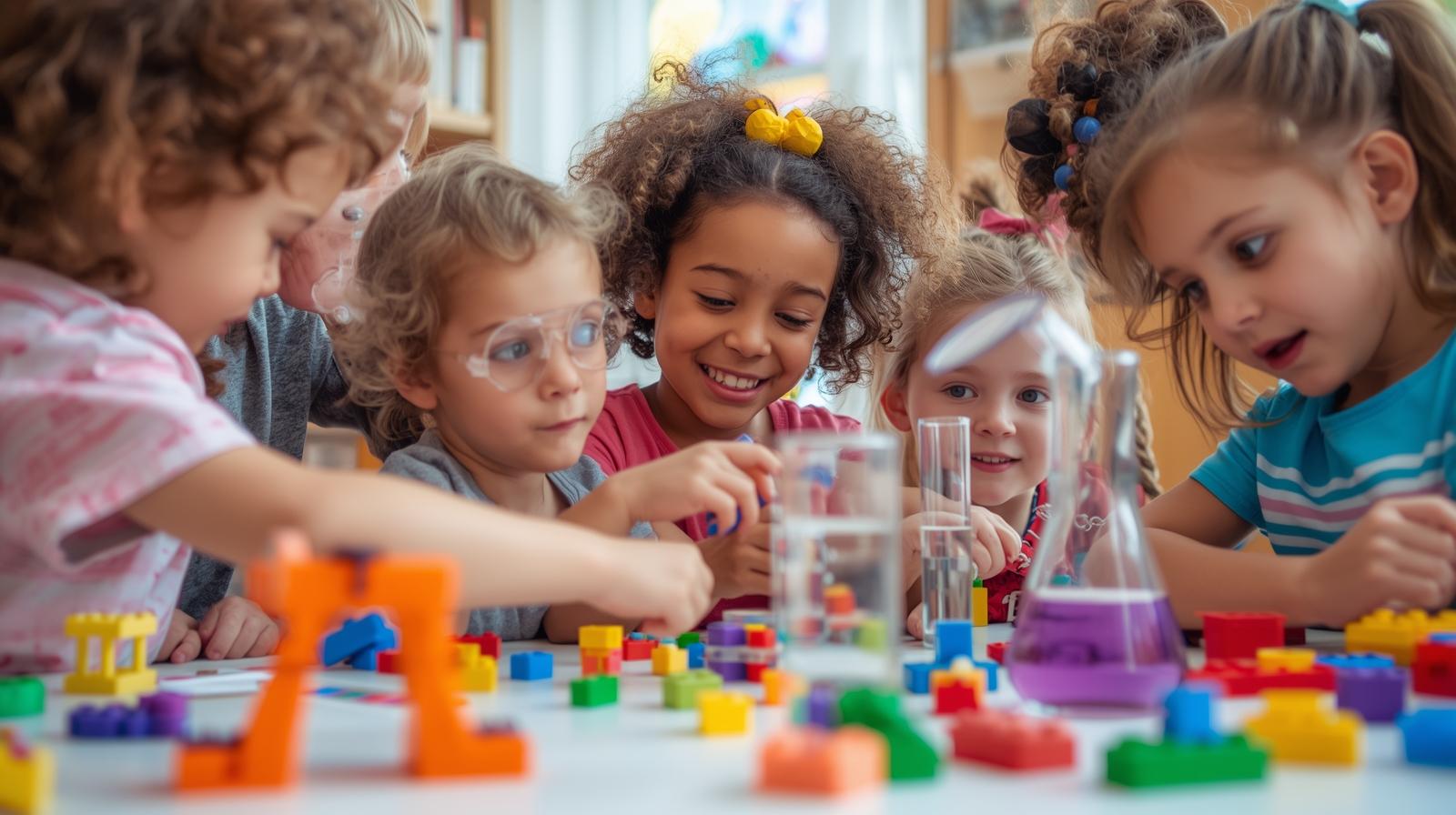
If you’ve ever heard your preschooler ask “Why?” fifteen times in a row, you already know something important:
You have a little scientist at home.
Preschoolers are naturally curious. They want to mix, pour, stack, observe, and experiment. The good news? You don’t need expensive kits or complicated setups to nurture that curiosity.
With a few simple household items, you can turn everyday moments into exciting DIY science activities that build early STEM skills while keeping playtime fun and screen-free.
In this guide, you’ll discover easy, safe, and engaging science activities perfect for curious preschoolers.
Why DIY Science Is Powerful for Preschoolers
DIY science activities help children develop:
- Observation skills
- Early problem-solving
- Cause-and-effect understanding
- Vocabulary development
- Confidence in exploration
More importantly, science builds something deeper:
Curiosity.
And curiosity is the foundation of lifelong learning.
Safety First: Simple Guidelines
Before starting any science activity:
- Always supervise closely
- Use non-toxic materials
- Avoid small choking hazards
- Keep experiments short (10–20 minutes is ideal)
- Focus on exploration, not perfection
Preschool science should feel playful—not like a formal lesson.
Easy DIY Science Activities for Curious Preschoolers
Here are some simple, engaging experiments you can try today.
1. Baking Soda & Vinegar Volcano
What You’ll Need:
- Baking soda
- Vinegar
- Food coloring (optional)
- Small container
What Happens:
When baking soda and vinegar mix, they create a fizzy reaction.
What Kids Learn:
- Chemical reactions
- Cause and effect
- Observation skills
Parent Tip:
Ask, “What do you think will happen if we add more vinegar?” Encourage predictions.
This classic experiment never gets old—and preschoolers love the fizzing surprise.
2. Sink or Float Experiment
What You’ll Need:
- A bowl of water
- Small objects (spoon, leaf, toy, coin, cork)
What Happens:
Some objects sink, others float.
What Kids Learn:
- Early physics concepts
- Prediction skills
- Sorting and classification
Parent Tip:
Let your child guess before placing each item in water. Celebrate correct and incorrect guesses equally—both teach learning.
3. Color Mixing with Water
What You’ll Need:
- Clear cups
- Water
- Food coloring
What Happens:
Mix primary colors to create new colors.
What Kids Learn:
- Basic color theory
- Experimentation
- Visual observation
Parent Tip:
Ask, “What do you think red and blue will make?” Let them explore freely.
This simple activity builds both creativity and scientific thinking.
4. Growing Beans in a Jar
What You’ll Need:
- Dry beans
- Cotton balls
- Clear jar
- Water
What Happens:
Over several days, the bean sprouts.
What Kids Learn:
- Plant life cycles
- Patience
- Responsibility
Parent Tip:
Make it a daily observation routine. Ask, “What changed today?”
This activity builds long-term curiosity and consistency.
5. DIY Magnet Exploration
What You’ll Need:
- A child-safe magnet
- Small household items
What Happens:
Some objects stick to magnets, others don’t.
What Kids Learn:
- Magnetic properties
- Classification
- Testing hypotheses
Parent Tip:
Turn it into a treasure hunt: “Find five things the magnet sticks to!”
6. Ice Melting Experiment
What You’ll Need:
- Ice cubes
- Salt
- Warm water
- Droppers (optional)
What Happens:
Salt speeds up melting.
What Kids Learn:
- Temperature effects
- Observation
- Simple chemistry
Parent Tip:
Let them touch (briefly) and compare ice before and after adding salt.
How to Make DIY Science Even More Engaging
Here’s how to add more excitement:
- Ask open-ended questions
- Let your child lead
- Encourage drawing what they observe
- Repeat experiments with small variations
- Celebrate curiosity, not outcomes
The goal isn’t to “teach science perfectly.”
The goal is to nurture wonder.
Turning Science into a Weekly Routine
You don’t need to do experiments every day.
Try this simple schedule:
- Monday: Quick water experiment
- Wednesday: Observation activity
- Friday: Messy science (like volcano)
- Weekend: Nature exploration walk
Consistency builds excitement.
Real Parent Moment
Many parents say their preschoolers struggle with attention span.
But when hands are busy and curiosity is engaged?
Focus improves naturally.
One parent shared that their child, who rarely sat still, stayed engaged for 20 minutes during a simple sink-or-float experiment.
Why? Because it felt like discovery—not instruction.
Common Mistakes to Avoid
- Over-explaining concepts
- Rushing the experiment
- Correcting every “wrong” guess
- Expecting perfect results
Remember: Preschool science is about exploration, not accuracy.
When to Consider a Science Kit
While DIY experiments are fantastic, ready-made preschool science kits can:
- Save prep time
- Include safe, measured materials
- Offer structured activities
- Introduce new themes
If your child loves DIY science, rotating in an affordable kit once in a while can keep excitement high.
Conclusion
DIY science activities for curious preschoolers don’t require fancy equipment or expensive kits.
All you need is:
- Simple materials
- A little time
- A lot of curiosity
When you nurture early scientific thinking through hands-on play, you’re building more than knowledge—you’re building confidence, creativity, and lifelong learning habits.
Your preschooler isn’t just making a volcano.
They’re discovering how the world works.
Affiliate Disclosure: Some links in this post may be affiliate links. If you purchase through these links, we may earn a small commission at no extra cost to you.