
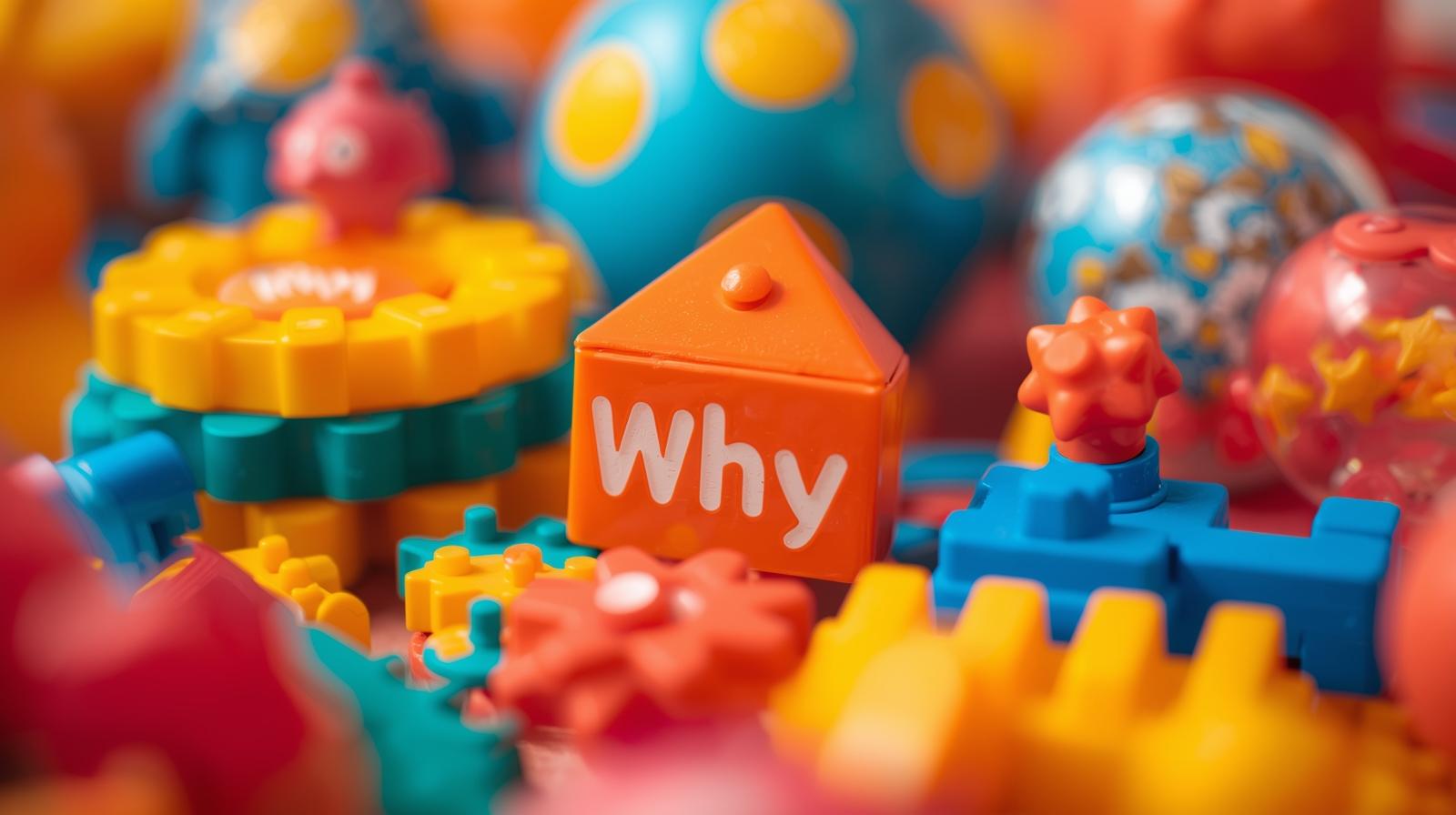
If you have a three-year-old, you already know the phase.
“Why is the sky blue?”
“Why does it move?”
“Why can’t I see inside it?”
At age three, curiosity explodes. Children aren’t just playing anymore — they’re trying to understand how the world works.
This is one of the most important windows for learning, and the right STEM toys can turn endless “why” questions into meaningful discovery.
The best STEM toys for 3 years old don’t give answers. They invite children to test ideas, make predictions, and figure things out through play.
What Makes Age Three So Important for STEM Learning
At three years old, children are rapidly developing:
- Language and reasoning
- Cause-and-effect thinking
- Early science and math concepts
- Imagination mixed with logic
- Confidence in asking questions
Unlike younger toddlers, three-year-olds can follow simple steps, compare outcomes, and explain what they notice — even if their explanations are still wonderfully imperfect.
STEM toys at this age should encourage exploration, not perfection.
Best Types of STEM Toys for Curious 3 Years Old
1. Cause-and-Effect Exploration Toys
Toys that allow children to change something and observe the result are perfect for “why” thinkers.
Water tables, ball tracks, gear boards, and marble-style runs (with large, safe pieces) help children experiment repeatedly.
What kids learn:
- Prediction and observation
- Early physics concepts
- Logical sequencing
2. Building and Construction Toys With Variety
Three-year-olds want more than stacking — they want to design.
Construction toys with multiple shapes, connectors, and ways to rebuild allow kids to test ideas and ask questions like “What if I do this?”
What kids learn:
- Spatial reasoning
- Problem solving
- Early engineering thinking
3. Simple Science Discovery Kits
STEM toys that introduce magnets, light, shadow, water, or plants are especially powerful at this age.
Hands-on science kits designed for preschoolers allow kids to explore natural curiosity safely.
What kids learn:
- Scientific observation
- Pattern recognition
- Curiosity-driven experimentation
4. Sorting, Matching, and Classification Toys
Three-year-olds love figuring out how things belong together.
Toys that involve sorting by size, color, shape, or function help kids organize information — a foundational STEM skill.
What kids learn:
- Early math logic
- Categorization
- Attention to detail
5. Open-Ended Role-Play STEM Toys
Toys that blend pretend play with STEM concepts — like toy tools, simple machines, or pretend labs — allow kids to explore ideas through imagination.
These toys are especially good for children who ask questions while acting out scenarios.
What kids learn:
- Creative problem solving
- Language development
- Real-world connections
6. Puzzle-Based Problem Solving Toys
At age three, children enjoy puzzles with a challenge — but not frustration.
Chunky puzzles, sequencing boards, and logic-based matching games help children slow down and think.
What kids learn:
- Persistence
- Logical thinking
- Confidence through trial and error
How to Choose STEM Toys for a “Why” Kid
When choosing toys for a curious three-year-old, ask:
- Does this toy allow experimentation?
- Can my child use it in more than one way?
- Does it encourage questions rather than give answers?
- Will it grow with my child over the next year or two?
The best toys don’t rush learning — they let curiosity lead.
What to Avoid at This Age
- Toys that explain everything automatically
- Screen-based “learning” toys that remove exploration
- Overly structured kits with only one correct result
- Toys that discourage questioning or experimentation
If a toy does all the thinking for your child, it limits learning.
How Parents Can Support Curious Play
You don’t need to know all the answers.
Instead:
- Ask “What do you think will happen?”
- Let your child test their idea
- Talk about what changed and what didn’t
- Celebrate effort, not outcomes
STEM learning at age three is about thinking together, not teaching facts.
Why STEM Toys Are Perfect for the “Why” Phase
STEM toys help curious three-year-olds:
- Turn questions into experiments
- Build confidence in their thinking
- Learn patience through trial and error
- Develop a lifelong love of learning
When curiosity is supported instead of rushed, children thrive.