
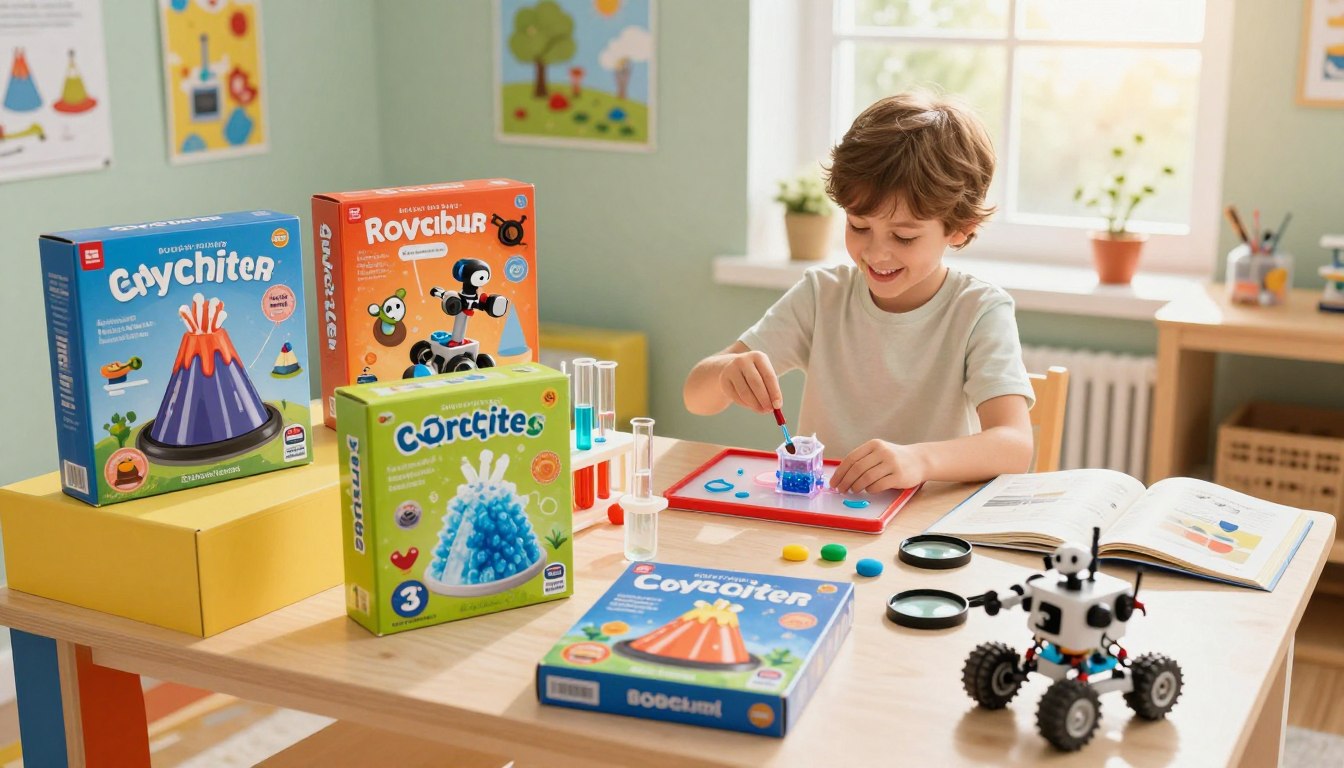
It’s important to find tools that spark curiosity without spending too much. You want to give hands-on learning experiences that excite young minds. These experiences help build a love for discovery and logic in kids.
These educational bundles mix fun with learning. You can turn your kitchen into a lab with affordable materials. This guide shows you the best instructional packs that are both affordable and high-quality.
Choosing the right project is key to growing critical thinking skills. You’ll find out how to pick quality options that fit your budget and teaching goals. Let’s explore how DIY activities can change your home classroom.
Key Takeaways
- Identify budget-friendly STEM resources that maximize value.
- Prioritize instructional quality and developmental alignment.
- Utilize common household items to reduce overall costs.
- Enhance critical thinking through engaging hands-on play.
- Ensure safety while maintaining high educational standards.
- Focus on reusable materials to extend the learning lifecycle.
Why STEM Learning Matters for Elementary-Age Children
STEM education is key for young kids. It shapes their future careers and problem-solving skills. It covers science, technology, engineering, and math, all vital for growing minds.
Starting stem activities for kids early boosts their analytical skills. These activities spark curiosity and creativity. Through hands-on learning projects, kids learn to think critically and work together.
Science experiments for children are a big part of STEM. They make learning fun and interactive. Kids learn to analyze data and think deeply about the world.
Early STEM education greatly impacts a child’s future. It builds a strong base in math and science. It also prepares them for a world where tech and innovation keep growing.
To make STEM learning fun, we need to make it accessible. Parents and teachers can do this by adding hands-on learning projects to daily life. This includes fun science experiments, coding, and engineering challenges.
In short, STEM learning is more than just subjects. It’s about being curious, innovative, and strong. By starting stem activities for kids early, we guide them towards a bright future.
What Makes a Great DIY Science Kit for 7-10 Year Olds
A good DIY science kit for kids should be safe, educational, and fun. It should let your child learn and have fun at the same time.
Safety is key in DIY science kits. Look for kits with non-toxic materials and low accident risk. Many educational science kits come with safety tips to keep kids safe while they learn.
An interactive science kit makes learning hands-on. It includes experiments and activities that help kids understand science better. Kids learn to think critically and solve problems in new ways.
When picking a DIY science kit, think about the educational content. The kit should match your child’s schoolwork or interests. This makes learning more fun and relevant. Some kits even come with guides that explain the science behind the experiments.
Choose kits that spark curiosity and creativity. The best kits for kids are those that make them want to learn more. They inspire kids to ask questions and explore. This way, you’re not just teaching science, but also encouraging a love for learning that lasts a lifetime.
Top Budget-Friendly DIY Science Kits for Ages 7–10
Find the best DIY science kits for kids aged 7-10. These kits are fun and teach kids a lot. They help young scientists learn by doing.
National Geographic Kids Microscope Kit
The National Geographic Kids Microscope Kit is great for kids starting with microscopy. It comes with slides and a guide to help them learn.
Overview: A beginner’s microscope kit that includes everything needed to start exploring the microscopic world.
Pros: Easy to use, comes with prepared slides, and a comprehensive learning guide.
Cons: The microscope is not as powerful as more advanced models.
Key Features: Includes prepared slides, learning guide, and a sturdy microscope.
Best For: Children aged 7-8 who are just starting to explore science.
4M Crystal Growing Kit
The 4M Crystal Growing Kit lets kids grow their own crystals. It teaches them about geology and chemistry.
Overview: A fun and educational kit that lets kids grow their own crystals.
Pros: Encourages STEM learning, easy to follow instructions.
Cons: Crystals may take a while to grow.
Key Features: Includes crystal growing solution, seed crystal, and instructions.
Best For: Children aged 8-10 who enjoy chemistry and geology.
Thames & Kosmos Chemistry Set
The Thames & Kosmos Chemistry Set introduces kids to chemistry. It has many experiments and activities.
Overview: A detailed chemistry set that includes various experiments and activities.
Pros: Comprehensive guide, safe materials, and engaging experiments.
Cons: Some materials may need to be purchased separately.
Key Features: Includes various chemicals, equipment, and a detailed guide.
Best For: Children aged 9-10 who have an interest in chemistry.
Learning Resources Primary Science Microscope
The Learning Resources Primary Science Microscope is for young kids. It’s easy for them to explore the microscopic world.
Overview: A simple and safe microscope designed for primary school children.
Pros: Easy to use, durable, and comes with prepared slides.
Cons: Limited magnification power.
Key Features: Includes prepared slides and a sturdy microscope.
Best For: Children aged 7-8 who are beginners in science.
Magic School Bus Science Kit
The Magic School Bus Science Kit is based on the popular TV series. It offers fun and educational experiments.
Overview: A themed science kit that includes various experiments based on the Magic School Bus series.
Pros: Engaging theme, easy to follow instructions.
Cons: Limited to the theme, some materials may be required separately.
Key Features: Includes various experiment materials and instructions.
Best For: Children aged 7-10 who enjoy the Magic School Bus series.
KL Diversified Instruments Solar System Kit
The KL Diversified Instruments Solar System Kit lets kids build and learn about the solar system.
Overview: A kit that lets kids build models of the solar system.
Pros: Educational, promotes understanding of the solar system.
Cons: Some parts may be fragile.
Key Features: Includes model parts and instructions.
Best For: Children aged 8-10 who are interested in astronomy.
Here is a comparison of the kits reviewed:
| Kit Name | Age Range | Key Features | Price |
|---|---|---|---|
| National Geographic Kids Microscope Kit | 7-8 | Microscope, prepared slides, learning guide | $25 |
| 4M Crystal Growing Kit | 8-10 | Crystal growing solution, seed crystal, instructions | $20 |
| Thames & Kosmos Chemistry Set | 9-10 | Chemicals, equipment, detailed guide | $40 |
| Learning Resources Primary Science Microscope | 7-8 | Microscope, prepared slides | $30 |
| Magic School Bus Science Kit | 7-10 | Experiment materials, instructions | $35 |
| KL Diversified Instruments Solar System Kit | 8-10 | Model parts, instructions | $28 |
How to Choose the Right Science Kit for Your Child
Choosing the right science kit for your child is important. There are many options out there.
Think about what your child likes and what they can do. A kit that matches their interests will keep them excited. Also, a kit that fits their skill level will help them learn and do the experiments.
Key Factors to Consider:
- The child’s age and skill level
- The kit’s educational value and content
- Safety features and precautions
- The kit’s complexity and the level of adult supervision required
As Dr. Jane Smith, a renowned science educator, once said,
“The best science kits are those that challenge children to think critically and encourage them to ask questions.”
Here’s a comparison of some popular science kits to help you decide:
| Science Kit | Age Range | Educational Focus | Safety Features |
|---|---|---|---|
| Kit A | 7-10 | Chemistry | Goggles, Gloves |
| Kit B | 8-12 | Physics | Protective Case |
| Kit C | 6-9 | Biology | Specimen Containers |
By looking at these factors and comparing kits, you can find the best one for your child.
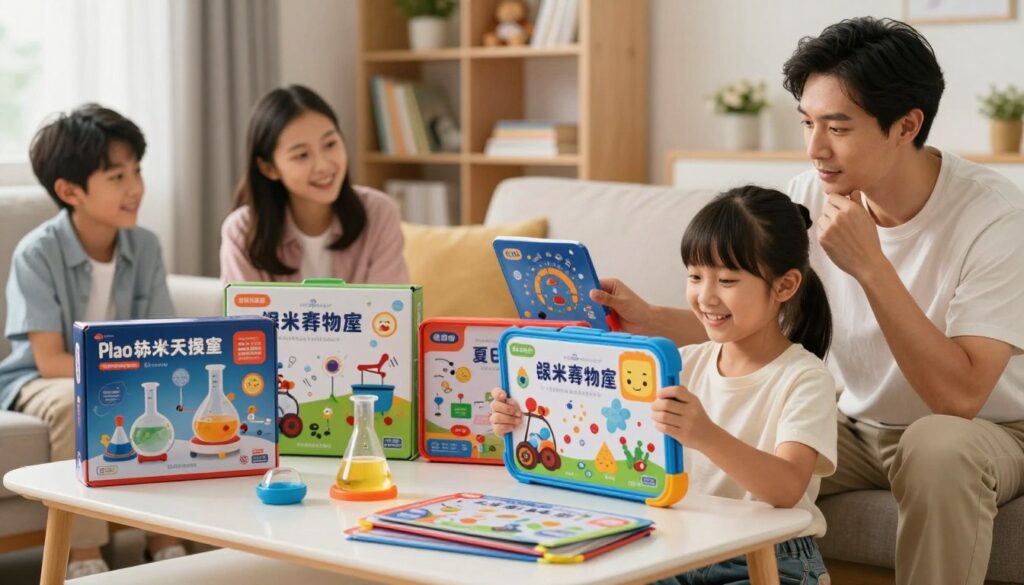
The right science kit can be a great learning experience. It can help your child love science and enjoy learning by doing.
Maximizing Value from Budget Science Kits
You can make DIY science kits more valuable by adding them to a STEM curriculum. This way, you get more out of the kits and give kids a deeper learning experience.
Start by adding more learning stuff to the kits. This could be books, online resources, or videos. For example, if a kit is about simple machines, add books on engineering history or videos showing how these machines work in real life.
Also, encourage kids to go beyond the kit. Ask them questions that make them think deeply about what they’ve learned. This could lead to them designing their own experiments or projects.
It’s also key to link the kits to a STEM curriculum. This means showing how the kit’s activities fit into science, technology, engineering, and math. For example, if a kit is about chemistry, show how math is used in chemical reactions.
Here are some ways to make learning better:
- Keep a science journal to record observations and results.
- Discuss the project’s findings with your child to reinforce their understanding.
- Explore real-world applications of the concepts learned through the kit.
By using these tips, you can turn budget science kits into great learning tools. They offer a fun and deep learning experience for kids.
Safety Tips for At-Home Science Experiments
When doing science experiments for children at home, safety is key. Interactive science kits are fun and teach a lot. But, you must plan and watch closely to stay safe.
Adult supervision is very important. Be there and help your child. This keeps them safe and helps them learn better.
It’s also important to use equipment right. Always read the kit’s instructions. Make sure your child knows how to use things safely. They should wear goggles and gloves when needed.

Being ready for emergencies is crucial. Have a first-aid kit ready. Teach your child what to do in case of an accident. This can prevent big problems.
Here are more safety tips:
- Keep the area clean and free of things that could get in the way.
- Choose science kits that fit your child’s age and skill level.
- Always follow the instructions carefully. Don’t skip steps or change things.
- Dispose of waste properly, as the kit instructions say.
By following these safety tips, you can make science fun and safe for your child. They can enjoy interactive science kits and experiments without worry.
Educational Benefits of Hands-On Science Learning
Hands-on science learning has many benefits. It improves scientific knowledge and also boosts critical thinking and problem-solving skills.
When kids do hands-on learning projects, they get to explore science in a fun way. This hands-on approach helps them understand and remember what they learn.
Using educational science kits gives kids the tools to do experiments. These kits make learning science fun and easy to get into.
Science projects for kids are both fun and educational. They help kids understand the world better. Kids learn to observe, measure, and analyze through these projects.
Hands-on science learning also teaches kids to ask questions and find answers through experiments. This helps them grow and prepares them for more science in the future.
Studies show that hands-on learning leads to better grades and more interest in STEM fields. By supporting hands-on science projects, you help your child succeed in science and more.
Common Mistakes to Avoid When Buying Science Kits
When buying diy science kits for ages 7-10, some common mistakes can be avoided. Make sure the kit matches your child’s interests. This is key.
If the kit doesn’t grab their attention, it’s a waste. Always check the recommended age range and the kit’s contents. This ensures it fits your child’s needs and skills.
Safety is also crucial. Inadequate safety measures can cause accidents. Look for kits with safety gear and clear instructions.
- Not checking the kit’s compatibility with your child’s age and skill level
- Overlooking the safety features and precautions
- Ignoring the educational value and content of the kit
- Failing to read reviews and ratings from other customers
Knowing these common mistakes helps you make a better choice. This way, you can pick the right educational science kits for your child.
To get the most out of kids’ science kits, follow these tips:
- Read the instructions carefully before starting the experiment
- Supervise your child during the experiment
- Encourage your child to ask questions and think critically
Where to Find the Best Deals on Science Kits
Looking for educational toys and science kits on a budget? You can find great deals with a little effort. As a parent or teacher, you want to give kids fun and learning experiences without spending too much.
Start by checking online stores. Amazon, Walmart, and eBay have lots of science kits for kids. You can compare prices, read reviews, and find discounts.
Educational stores are also a good place to look. They have many science kits on budget. The staff can help you choose the right one.
Don’t forget about discount stores and dollar stores. They might have affordable science kits. You can find deals on basic materials or kits for many experiments.
Watch for sales and discounts. Many stores offer special deals during holidays or back-to-school. Sign up for newsletters or follow social media to stay informed.
“The art of science is not just about the experiments; it’s about the curiosity and the joy of discovery.”
By doing your homework, you can find DIY science kits for ages 7-10 that are both fun and affordable. Whether online or in-store, there are many choices to help young scientists learn.
Creating Your Own DIY Science Experiments on a Budget
With a little creativity, you can turn household items into fun science experiments for children. This way, you save money and teach kids to be creative and resourceful.
You can make DIY science kits for ages 7-10 with items like baking soda, vinegar, and cardboard tubes. For instance, a homemade lava lamp can be made by mixing vegetable oil, water, and food coloring with an Alka-Seltzer tablet in a bottle.
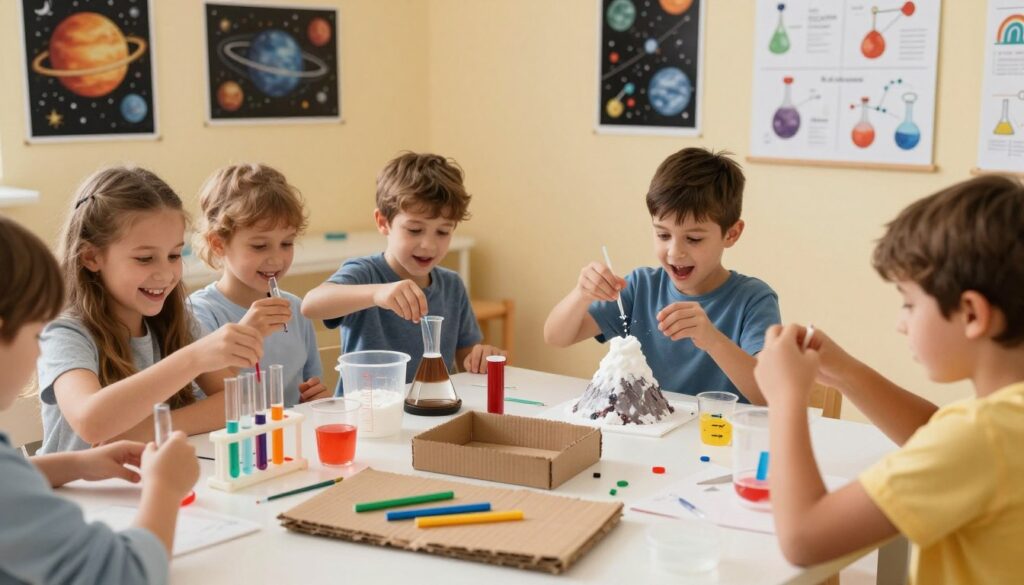
- Making a volcano erupt using baking soda and vinegar
- Creating a solar oven using a pizza box and aluminum foil
- Growing crystals using a super-saturated solution and a string
- Making a homemade battery using a lemon or potato
These experiments are not only fun but also teach kids about science. They learn about density, buoyancy, and chemical reactions.
By making your own DIY science experiments, you can make learning fun and tailored to your child’s interests and age.
Conclusion
DIY science kits for ages 7-10 are key for young STEM education. They make learning science, technology, engineering, and math fun and hands-on. By using these kits, your child gets to explore and learn in a new way.
Stem activities for kids boost their problem-solving skills and spark curiosity. Educational science kits make learning fun and easy. They help kids develop a love for learning that lasts a lifetime.
Choosing the right science kits and creating a supportive learning space is crucial. It helps your child excel in STEM subjects. Look into the options and start your child’s science adventure today.