
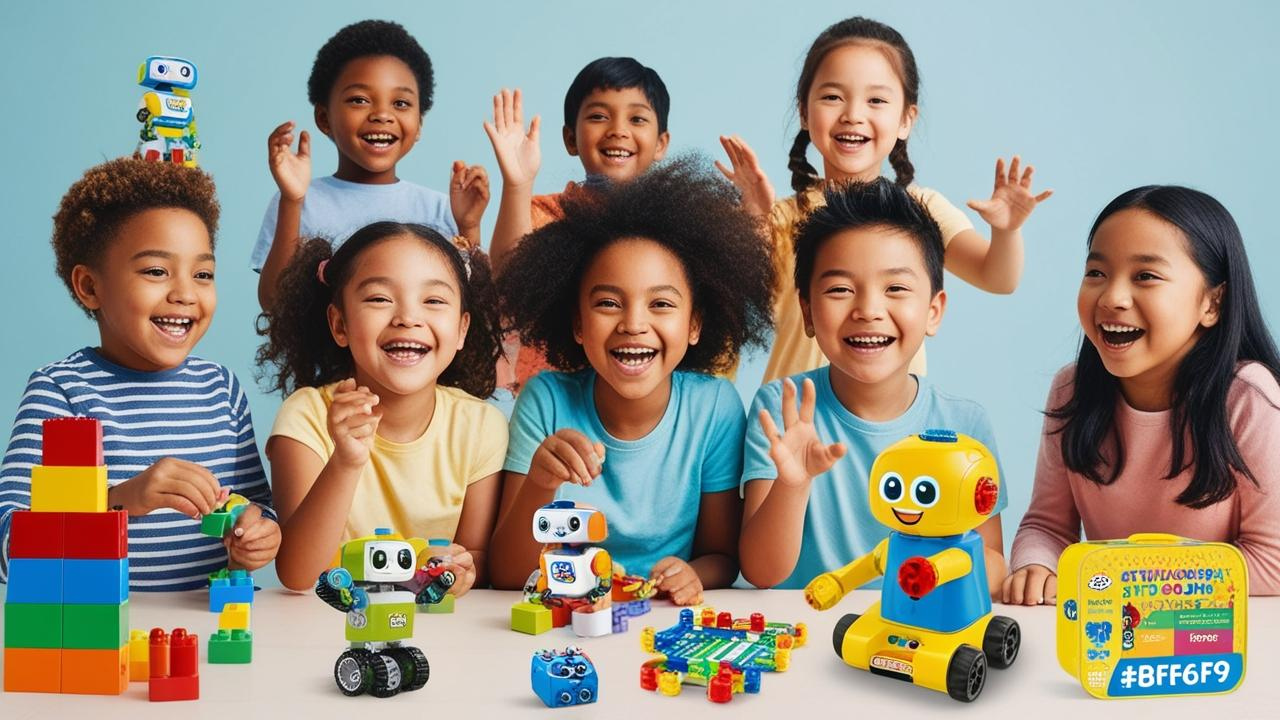
Despite years of progress, a gender gap still exists in science, technology, engineering, and math. Girls remain underrepresented in many STEM careers, especially in engineering, computer science, and advanced technology roles.
What many parents don’t realize is that this gap often begins long before college — even before middle school.
Research shows that early exposure to STEM experiences plays a critical role in shaping confidence, interest, and self-belief. This is where STEM toys quietly make a powerful difference.
The Gender Gap Starts Earlier Than Most Parents Think
Studies in child development reveal that children begin forming beliefs about what they are “good at” at a very young age.
By elementary school, many girls already:
- Underestimate their math and science abilities
- Avoid challenging technical tasks
- Associate STEM fields with boys
These perceptions often form before formal academic differences appear.
Early Play Shapes Long-Term Identity
Play isn’t just fun — it’s how kids test identities.
STEM toys give children a safe, pressure-free space to:
- Experiment
- Fail and retry
- Build confidence through success
When girls regularly engage with building sets, logic games, and engineering challenges, they begin to see themselves as capable problem-solvers.
That identity matters more than early grades.
Confidence Is the Biggest Predictor of STEM Participation
Research consistently shows that confidence — not ability — is one of the strongest predictors of whether students pursue STEM subjects.
STEM toys help build confidence by:
- Removing time pressure
- Eliminating grades
- Encouraging exploration
This creates positive early experiences that carry into the classroom.
Countering Stereotypes Through Normalization
When STEM play becomes part of everyday life, it stops feeling “special” or “intimidating.”
Girls who grow up with STEM toys are more likely to:
- View technology as familiar
- See problem-solving as enjoyable
- Feel comfortable engaging in technical discussions
The more normal STEM feels, the less power stereotypes have.
Open-Ended STEM Toys Support Inclusive Learning
Open-ended toys allow children to approach problems in their own way.
This matters because research shows that girls often prefer:
- Creative problem-solving
- Collaborative exploration
- Real-world relevance
STEM toys that allow multiple solutions support diverse thinking styles instead of forcing one “correct” approach.
Early Exposure Reduces Later Anxiety
STEM anxiety — especially in math and coding — is common among girls and women.
Early hands-on play reduces anxiety by:
- Building familiarity
- Lowering fear of mistakes
- Encouraging experimentation
Children who grow up playing with STEM toys are less likely to view STEM subjects as threatening later.
Role Modeling Without Pressure
STEM toys allow kids to imagine themselves as builders, engineers, and innovators without labels or expectations.
This quiet role modeling is powerful because it:
- Avoids performance pressure
- Builds intrinsic motivation
- Supports long-term engagement
Girls don’t need to be told they belong in STEM — they need experiences that prove it to themselves.
Why This Matters Beyond Childhood
The effects of early STEM play don’t stop in elementary school.
Long-term studies link early STEM engagement to:
- Higher enrollment in advanced math and science courses
- Greater persistence in challenging subjects
- Increased likelihood of STEM career interest
Closing the gender gap starts with early access and confidence — not late intervention.
What Parents Can Do
Parents don’t need to push or persuade.
Instead:
- Offer STEM toys as normal play options
- Avoid gendered expectations
- Celebrate effort over results
When STEM play is part of everyday life, interest grows naturally.
Final Thoughts
STEM toys won’t single-handedly fix systemic inequality.
But they do something equally important: they change how children see themselves.
By giving girls early, positive experiences with STEM, we remove barriers before they form — and that’s how real progress begins.