
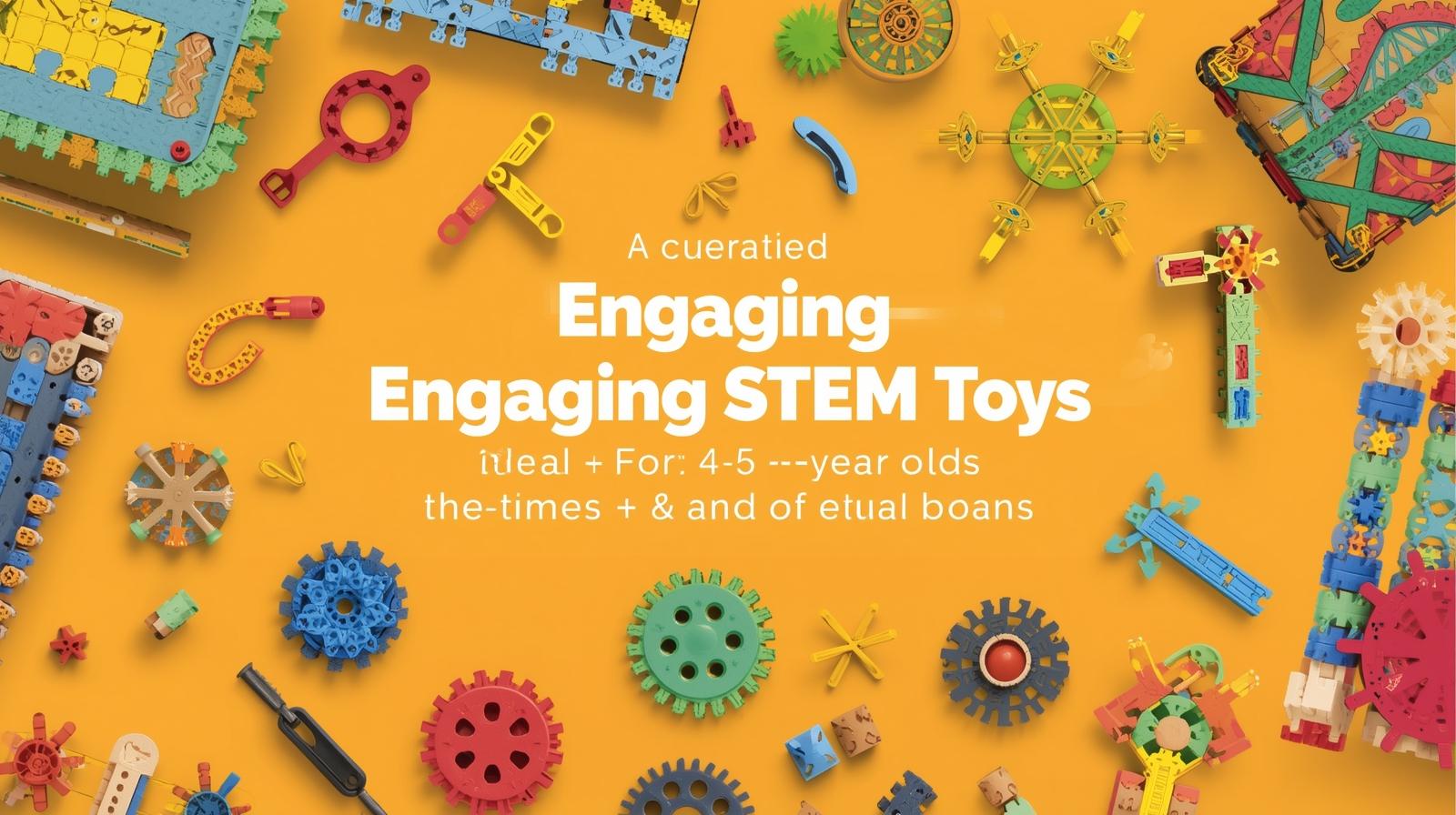
If your child loves taking things apart, stacking pieces into elaborate towers, or asking to “build it again but bigger,” you’re raising a natural tinkerer.
Between ages four and five, children move from simple construction to intentional design. They begin planning what they want to build, testing ideas, fixing mistakes, and trying again. This is a critical stage for STEM learning — and the right toys can make a lasting difference.
The best STEM toys for 4–5 year olds who love building don’t just entertain. They challenge thinking, encourage persistence, and help children see themselves as problem solvers.
Why Building and Tinkering Matter at Ages 4–5
At this age, children are rapidly developing:
- Logical reasoning
- Fine motor control
- Early engineering concepts
- Spatial awareness
- Focus and patience
Unlike toddlers, four- and five-year-olds can follow multi-step processes, compare outcomes, and talk about why something worked or didn’t.
Building toys are powerful because they let children learn through trial and error — without pressure or grades.
Best Types of STEM Toys for Young Builders
1. Construction Sets With Multiple Building Options
Open-ended construction sets allow children to create different structures using the same pieces. Look for toys with connectors, rods, panels, or interlocking parts that can be rearranged endlessly.
These toys support creativity while quietly introducing engineering concepts.
Skills developed:
- Structural thinking
- Problem solving
- Creative design
2. Magnetic Building Toys
Magnetic construction toys are especially engaging for this age group. They allow children to experiment with balance, symmetry, and shapes while receiving immediate feedback.
The ease of connection encourages longer play sessions and more complex designs.
Skills developed:
- Geometry awareness
- Spatial reasoning
- Experimentation
3. Simple Mechanical and Gear-Based Toys
Gear boards, simple machines, and mechanical kits help children understand how movement works. Turning one piece and watching others move is endlessly fascinating for kids who love to tinker.
These toys introduce cause and effect in a hands-on, visual way.
Skills developed:
- Mechanical reasoning
- Cause and effect
- Systems thinking
4. STEM Building Kits With Guided Challenges
Some children thrive when given a starting point. STEM kits that include building challenges or idea cards encourage kids to follow steps first, then modify designs on their own.
This balance builds confidence without limiting creativity.
Skills developed:
- Instruction following
- Planning
- Independent experimentation
5. Puzzle-Based Construction Toys
Three-dimensional puzzles and building challenges require children to visualize outcomes before assembling pieces.
These toys are ideal for children who enjoy solving problems and figuring out how parts fit together.
Skills developed:
- Spatial visualization
- Logical thinking
- Persistence
6. Pretend Play Toys With Real-World Tools
Tool sets, workbenches, and build-and-fix toys combine imagination with hands-on construction. Children learn how tools work while role-playing real-world scenarios.
This type of play strengthens both creativity and practical thinking.
Skills developed:
- Fine motor skills
- Real-world problem solving
- Confidence
How to Choose the Right Building STEM Toy
Before buying, consider:
- Can this toy be built in more than one way?
- Does it encourage fixing mistakes instead of avoiding them?
- Is it sturdy enough for repeated rebuilding?
- Will it grow with my child over the next few years?
The best toys invite experimentation rather than reward perfection.
What to Avoid for This Age Group
- Overly fragile kits that break easily
- Toys with only one correct final model
- Screen-based building apps
- Instructions that leave no room for creativity
If children are afraid to make mistakes, they stop experimenting.
How Parents Can Support Builder Kids
You don’t need to direct the build.
Instead:
- Ask what they’re trying to make
- Let them struggle productively
- Encourage redesigns instead of quick fixes
- Praise effort and creativity, not results
Mistakes are part of engineering — and kids learn that naturally through play.
Why Building STEM Toys Have Long-Term Benefits
Children who build and tinker regularly develop:
- Stronger problem-solving skills
- Better focus and patience
- Higher confidence in learning
- A natural interest in engineering and science
These skills extend far beyond toys and into school, relationships, and real-world challenges.