
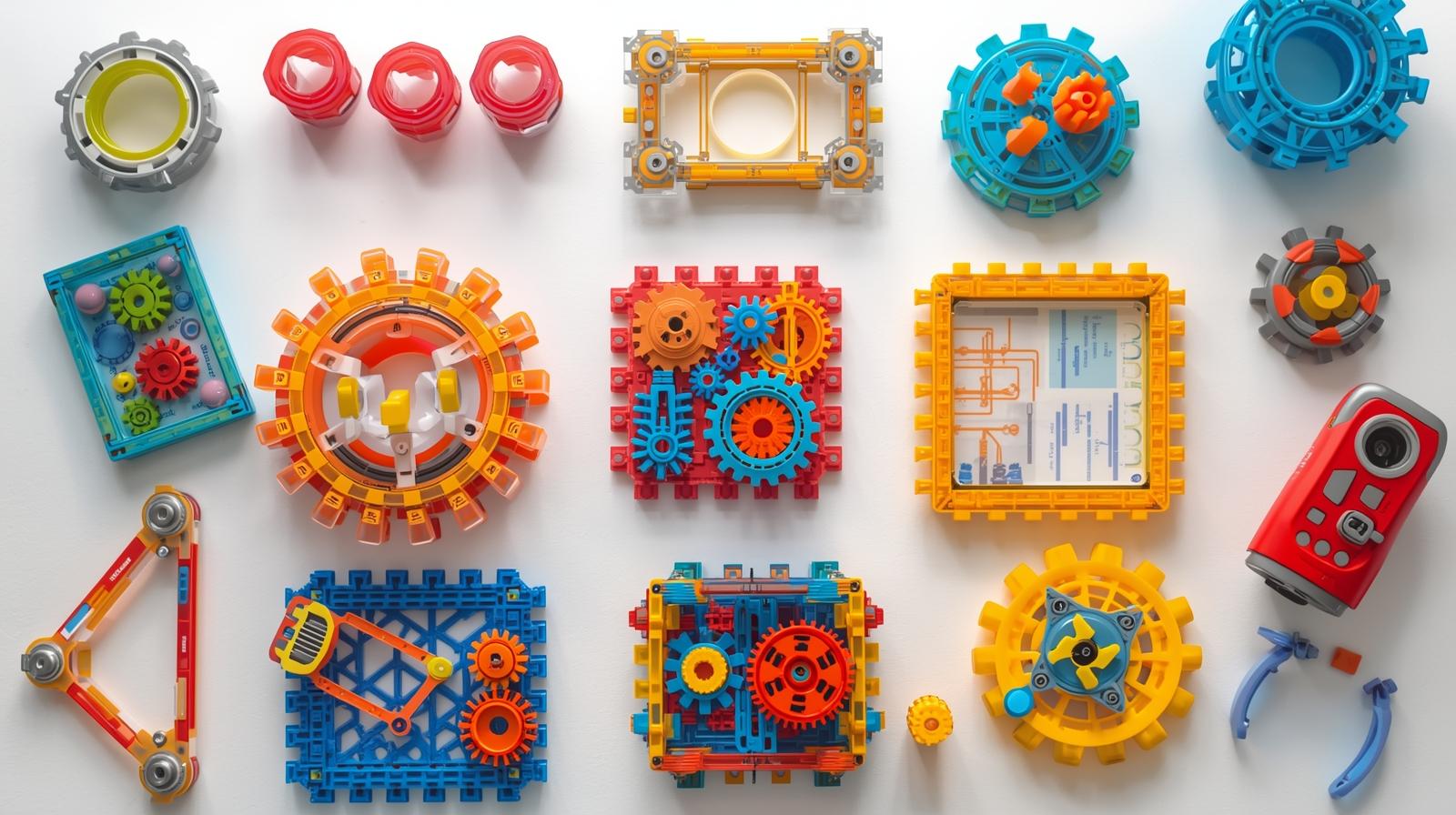
Parents often ask a very practical question before buying STEM toys:
“Will this actually help my child do better in school?”
More specifically — do STEM toys improve test scores?
The honest answer, backed by research, is nuanced. STEM toys don’t directly teach test questions. But they do build the core thinking skills that strongly influence academic performance, especially in math and science.
Let’s break down what studies actually show.
What Researchers Measure When Studying STEM Toys
Most studies don’t look at test scores alone. Instead, they measure the skills that predict academic success, such as:
- Problem-solving ability
- Spatial reasoning
- Logical thinking
- Working memory
- Attention and persistence
These are the same cognitive skills standardized tests rely on — even if the toy itself isn’t teaching formulas or vocabulary.
STEM Toys and Math Performance
Research consistently shows a strong link between spatial reasoning and math achievement.
Building toys, engineering kits, and construction sets improve spatial skills like:
- Visualizing shapes
- Understanding patterns
- Mental rotation
Multiple education studies have found that children with stronger spatial skills perform better in math tests later in school. STEM toys help develop those skills early, which can indirectly support higher math performance over time.
STEM Play Improves Problem-Solving Skills
Standardized tests don’t just measure answers — they measure how kids think.
STEM toys naturally train children to:
- Analyze a problem
- Try a solution
- Adjust when it fails
- Try again
Studies in developmental psychology show that children who regularly engage in hands-on problem-solving perform better on tasks requiring reasoning and logic — key components of math and science assessments.
Executive Function and Academic Success
Executive function includes skills like focus, memory, and self-control. These skills are among the strongest predictors of academic achievement across subjects.
Research published in child development journals shows that play-based STEM activities improve executive function by encouraging:
- Planning ahead
- Following sequences
- Holding information in working memory
Better executive function often translates to improved classroom behavior, stronger test-taking stamina, and better overall academic outcomes.
STEM Toys Increase Engagement With Learning
One consistent finding across studies is that children exposed to early STEM play show higher engagement with learning later.
Engaged students:
- Spend more time on tasks
- Are less anxious about mistakes
- Persist longer on difficult questions
While this doesn’t guarantee higher test scores, it creates the conditions where improvement is more likely.
Why STEM Toys Don’t Replace Studying
It’s important to be clear: STEM toys don’t replace textbooks, lessons, or practice.
They don’t directly teach:
- Test formats
- Curriculum-specific content
- Memorization-based knowledge
Instead, they prepare the brain to learn more effectively when formal instruction happens.
Long-Term Benefits Matter More Than Short-Term Scores
Some studies show modest short-term academic gains, but the strongest benefits of STEM play appear over time.
Children who grow up engaging in STEM play are more likely to:
- Feel confident in math and science
- Choose challenging academic paths
- Persist through difficult coursework
Those long-term effects matter more than a single test score.
What This Means for Parents
STEM toys work best when they are:
- Used consistently
- Paired with conversation and curiosity
- Part of a balanced learning environment
They don’t turn into instant grade boosters. But they do build the thinking foundation that supports academic success.
Final Verdict
So, do STEM toys improve test scores?
Not directly. Not instantly.
But research clearly shows they strengthen the cognitive skills that tests measure — especially in math, science, and reasoning.
Think of STEM toys as mental training tools. They don’t teach the test. They prepare the brain to handle it better.
And that’s a benefit that lasts far beyond any exam.