
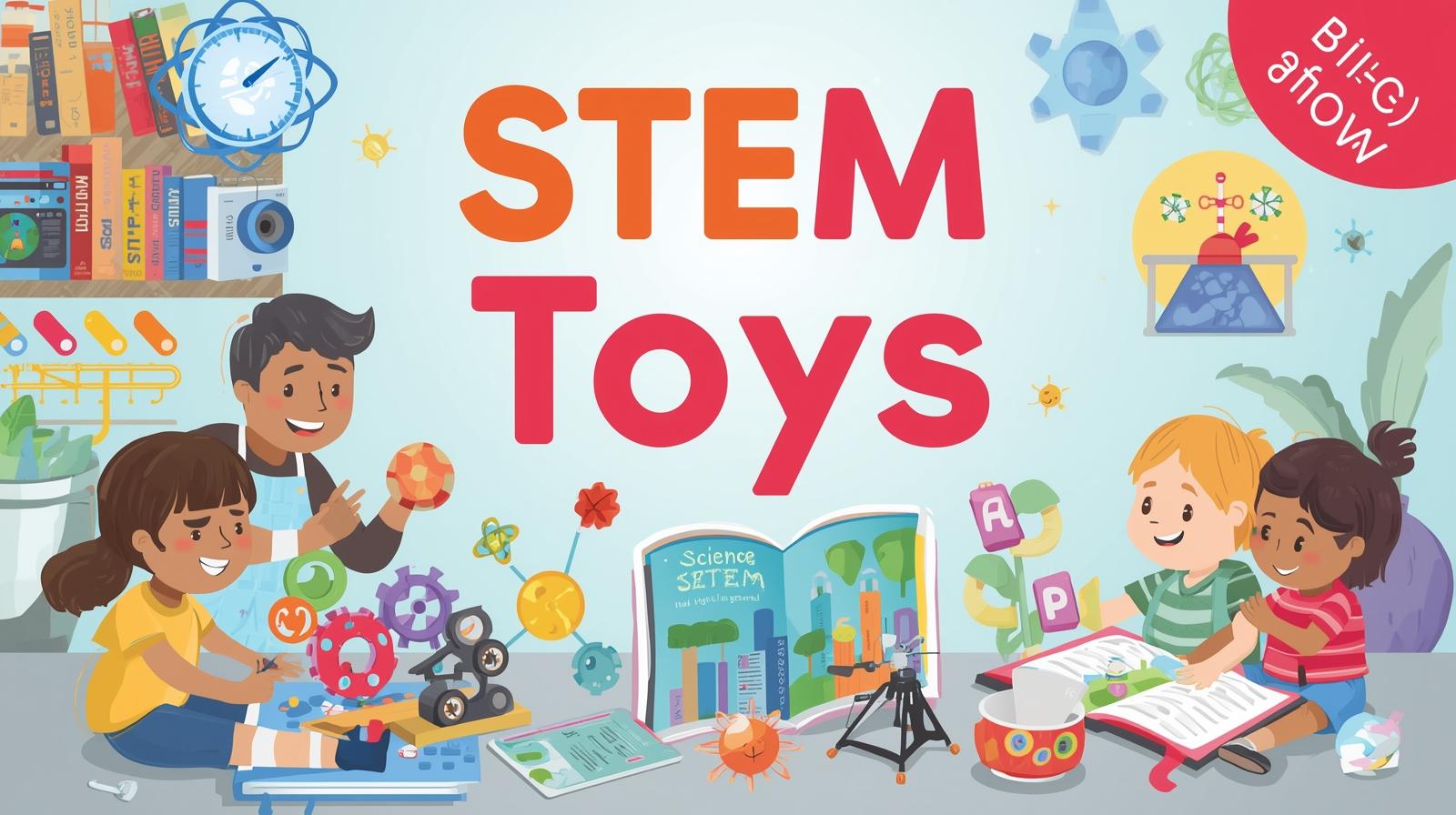
Storytime and STEM might seem like two separate worlds, but together they create powerful learning moments.
Books spark imagination. Hands-on toys turn ideas into action. When paired intentionally, stories help children understand why something matters, while STEM toys show them how it works.
The result is deeper engagement, better comprehension, and longer-lasting learning.
Here’s how to blend storytime with STEM play in a way that feels natural and fun.
Why Stories Strengthen STEM Learning
Stories give context to abstract ideas.
When children hear a story first, they:
- Build background knowledge
- Connect emotionally to concepts
- Stay focused longer during play
Narratives help kids understand problems before they try to solve them.
Choose Books That Spark Curiosity
You don’t need technical textbooks.
Look for storybooks that:
- Ask “why” and “how” questions
- Feature problem-solving characters
- Explore real-world phenomena
Fiction and nonfiction both work, as long as curiosity is at the center.
Pair One Book With One Simple Concept
Avoid overwhelming kids with too many ideas.
Choose one concept from the story, such as:
- Building structures
- Movement and motion
- Patterns or shapes
- Cause and effect
Then select a toy that lets kids explore that idea hands-on.
Read First, Build Second
Reading before building helps children visualize possibilities.
After the story, ask:
- “What problem did the character solve?”
- “How could we build something like that?”
This transition naturally invites STEM play without turning it into a lesson.
Let the Toy Extend the Story
Hands-on play works best when it feels like part of the narrative.
Encourage kids to:
- Recreate scenes
- Improve a design from the book
- Invent new solutions for the characters
This deepens comprehension and keeps play purposeful.
Encourage Questions, Not Answers
Resist the urge to explain everything.
Instead, respond with questions like:
- “What do you think will happen?”
- “Why do you think that worked?”
- “How could we change it?”
Question-driven play supports critical thinking and independence.
Mix Fiction With Real-World Exploration
Fiction sparks imagination, but real-world connections matter too.
If a story involves:
- Animals → explore habitats
- Machines → build moving parts
- Space → experiment with gravity
This blend helps kids see how stories relate to real life.
Keep Sessions Short and Flexible
Story + STEM doesn’t need to be long.
Even 15–20 minutes is effective when kids are engaged. Let interest guide the pace, and stop before frustration sets in.
Benefits Beyond STEM Skills
Pairing books with toys supports:
- Language development
- Vocabulary growth
- Emotional understanding
- Attention and focus
This approach strengthens learning across multiple areas at once.
Final Thoughts
When books and STEM toys work together, learning becomes meaningful.
Stories inspire ideas. Toys bring those ideas to life.
By pairing storytime with hands-on play, you’re not just teaching STEM — you’re building curiosity, confidence, and a lifelong love of learning.